I. What is an Excavator?
An excavator is a core piece of machinery in modern construction, mining, and landscaping. This multifunctional earth-moving equipment can perform basic excavation and loading tasks, as well as land leveling, slope correction, hoisting, demolition, trenching, and more, making it widely applicable. Given the overwhelming number of types of excavators available on the market, selecting the right equipment is crucial for work efficiency, construction safety, and cost control.
This article primarily explores the excavator types and sizes, including their classifications by size (mini excavator, small excavator, medium excavator, large excavator, and super large excavator) and modes of operation (crawler excavator and wheel excavator). It also emphasizes the flexibility offered by specialized work attachments. When deciding to purchase excavator equipment, it is essential to consider site conditions, project requirements, and costs to find the most suitable machinery.
II. Types of Excavators
1. Excavator Types and Sizes
This is the most fundamental and practical classification method, directly related to the excavator’s power and applicable project scale.
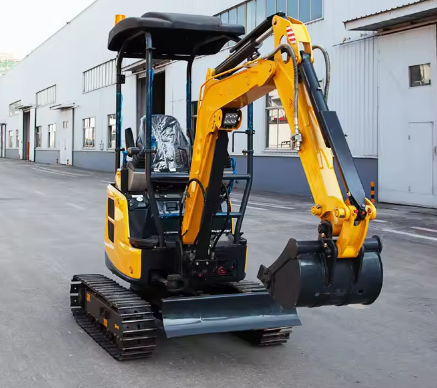
1) Mini/Small Excavators
- Specifications: Less than 7 tons, bucket capacity under 0.35 cubic meters. Features zero or minimal tail swing for compact operation and easy transport.
- Application Scenarios: Residential landscaping, indoor demolition, confined utility pipeline installation, and small foundation excavation.
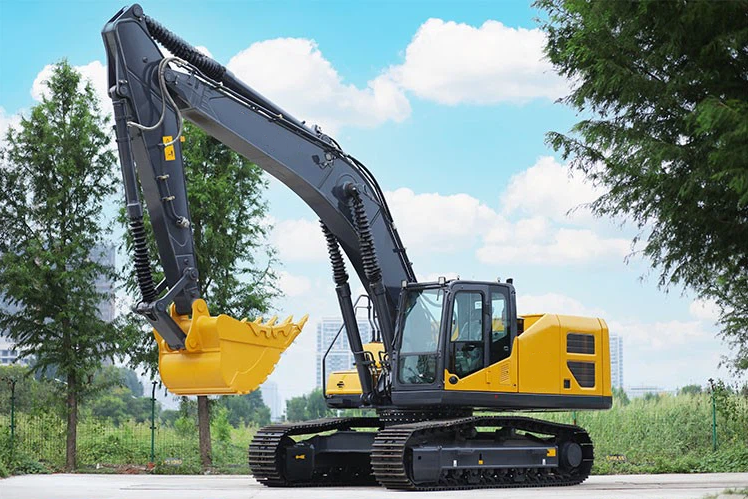
2) Medium Excavators
- Specifications: Weighing 7 to 45 tons, bucket capacity of 0.35 to 1.5 cubic meters. Balances power, speed, and versatility, with compatibility for various attachments.
- Application Scenarios: General construction, road building, medium earthmoving, river dredging, and material loading/unloading.
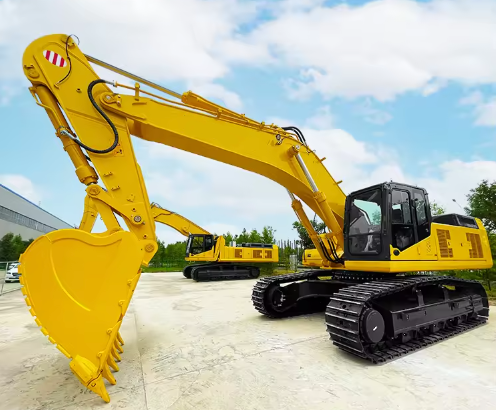
3) Large Excavators
- Specifications: Over 45 tons, with bucket capacities from 1.5 to 5.0 cubic meters. Designed for heavy-duty use with significant digging power but limited mobility.
- Application Scenarios: Large-scale mining, port construction, deep foundation excavation, and extensive earthmoving.
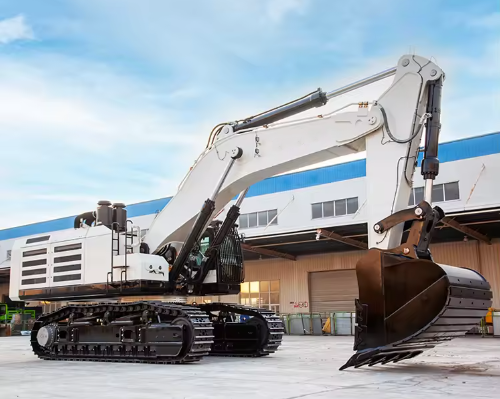
4) Mining Excavators
- Specifications: Typically over 100 tons, bucket capacities greater than 5.0 cubic meters. Includes hydraulic and cable-operated excavators for deep operations.
- Application Scenarios: Large-scale open-pit mining, canal excavation, and ultra-deep foundation construction.
2. Types of Excavators by Walking Method
The walking method determines the excavator’s mobility and adaptability to different terrains.
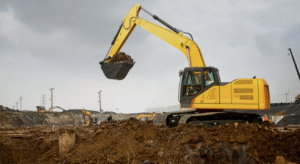
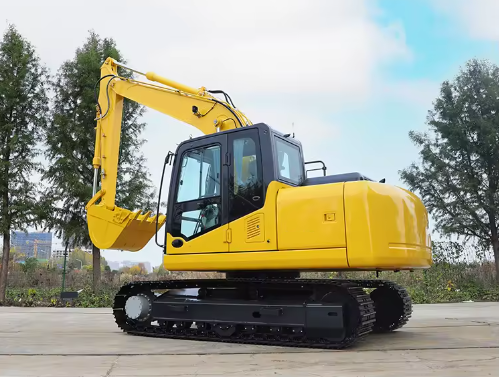
1) Crawler Excavators
- Features: Distributes weight for low ground pressure, offering excellent stability and traction on soft or uneven terrain. Slower travel speed requires a trailer for long distances.
- Application Scenarios: Outdoor job sites, soft soil areas (like marshes), sloped tasks, and heavy digging or lifting.
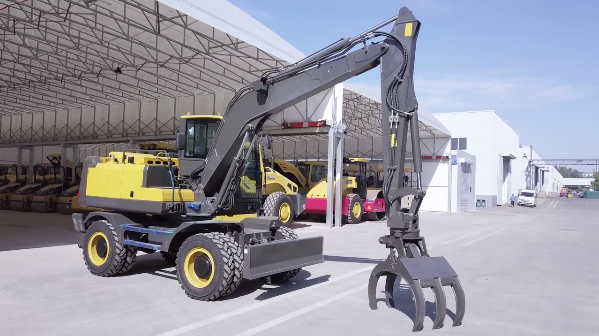
2) Wheeled Excavators
- Features: Provides good road mobility for quick urban relocations. Minimal damage to hard surfaces, but less stability on soft ground.
- Application Scenarios: Municipal engineering, road repairs, urban utility work, and sites needing frequent short-distance transfers.
3. Types of Excavators by Work Attachments
The work attachments define the excavator’s primary functions, and many standard excavators can utilize quick couplers to change front-end attachments, increasing versatility.
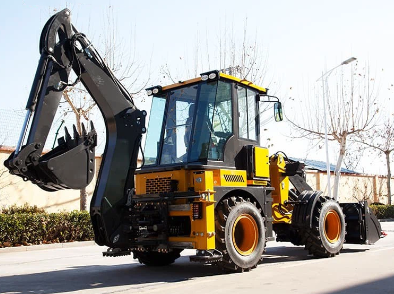
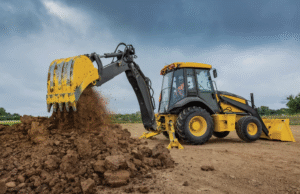
1) Excavator Loader (Backhoe)
- Design Features: Front-mounted loader bucket with a rear-mounted digging arm, typically allowed to rotate only about 200 degrees. Combines both digging and loading functions in a relatively compact body.
- Application Scenarios: Utility projects, small earthmoving tasks, trench backfilling, site leveling, and material handling. This is a multifunctional mainstay for small contractors.
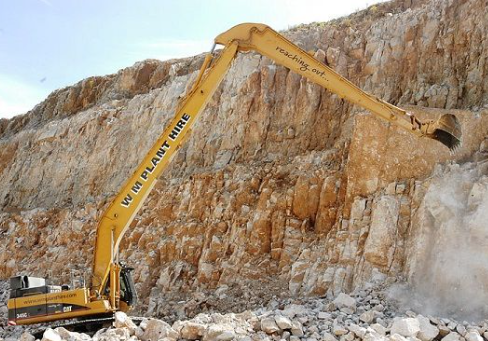
2) Long-Reach Excavators
- Design Features: Equipped with an exceptionally long boom and arm, capable of working at radii of over 20 meters. Counterweights are increased for balance.
- Application Scenarios: River and lake dredging, slope stabilization, deep pit excavations, and demolition of structures at a safe distance.
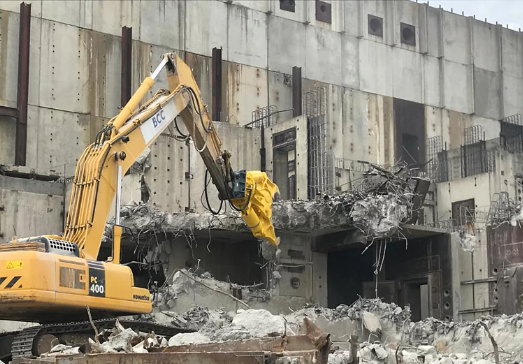
3) Demolition Excavators
- Design Features: Reinforced specifically for demolition tasks, equipped with heavier counterweights, fall protection cabins, and reinforced structures. Typically uses hydraulic shears or heavy-duty breakers as front-end tools.
- Application Scenarios: Building demolitions, steel structure cutting, and concrete breaking.
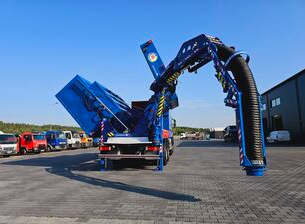
4) Vacuum Excavators
- Design Features: Also known as “non-destructive excavation machines.” These machines use high-pressure water or air to loosen soil, then utilize a powerful vacuum system to suction away debris, minimizing the risk of damaging existing underground structures.
- Application Scenarios: Precise locating and exposure of underground lines (cables, fiber optics, gas pipelines, etc.), non-intrusive excavation in sensitive areas, and tank cleaning.
III. Core Attachment Guide for Construction Excavator
1. Excavator Attachments
The most basic digging and loading tools. Common types include:
- General Bucket: For conventional earthmoving tasks.
- Trench Bucket: Narrow design for trench excavation.
- Rock Bucket: Reinforced for handling hard materials.
2. Augers
Hydraulic-driven drilling attachments that allow for changing drill bits and rods to meet various needs. Offers precise and efficient drilling for post planting, foundation piling, and soil sampling.
3. Hydraulic Breakers
Heavy-duty attachments that use hydraulic power to deliver high-frequency impacts. Powerful and efficient, mainly used for building demolition, concrete breaking, and rock excavation.
4. Hydraulic Quick Couplers
Enable the operator to quickly change attachments from the operator’s cabin. Greatly enhances the machine’s versatility and work efficiency, especially suited for sites that require frequent switching of tasks.

Attachment Selection Recommendations
When selecting attachments, consider compatibility with the construction excavator model and hydraulic system, specific task requirements, material characteristics (hardness, size, etc.), and the quality and after-sale service of the attachment brand.
IV. Four-Step Decision-Making Process to Purchase Excavator Excavator
Step 1: Assess Job Site Conditions
- Space Layout: Measure the area of the work zone and identify any obstacles (like walls, pipelines, existing buildings).
- Confined Space: Prioritize mini or zero tail swing excavators.
- Open Areas: Standard or large excavators can maximize efficiency.
- Ground Conditions: Use tracked excavators for soft, uneven, or sloped terrain, while wheeled excavators are preferable for hard, flat surfaces.
Step 2: Clarify Core Project Requirements
- Key Task Parameters: Determine the required digging depth and radius, weight capacity, and whether frequent attachment changes are necessary.
- Project Scale and Intensity:
For small earthmoving or landscaping, opt for mini/small excavators;
For general construction, choose standard medium excavators;
For large foundations, go for large or super large excavators.
Step 3: Consider Transportation and Logistics Constraints
- Transport Method: Wheeled excavators can move short distances on their own; tracked ones require low-bed trailers.
- On-Site Storage: Assess whether there is a safe and compliant space for storing equipment on-site.
Step 4: Calculate Total Cost
- Acquisition Method: For short-term projects, prioritize rental excavators; for long-term use, evaluate the overall ownership costs of purchasing.
- Cost Factors: Include initial purchase excavator costs, ongoing operational costs (fuel, attachment investments), maintenance costs, and excavator equipment residual value.
Quick Selection Comparison Chart for Construction Excavator
| Consideration | Option A (Restricted Conditions) | Option B (General Conditions) | Option C (Ideal Conditions) |
|---|---|---|---|
| Job Site Space | Confined, restricted | Medium, with obstacles | Open, unrestricted |
| Recommended Type | Mini/Zero Tail Swing | Small/Medium, consider tail swing | Standard/Large |
| Ground Condition | Soft, muddy, sloped | Mixed terrain | Hard, flat surfaces |
| Recommended Mobility | Tracked | Tracked (preferably) | Wheeled or tracked |
| Main Tasks | Precision digging, trenching | General excavation, loading | Deep digging, heavy loads, breaking |
| Recommended Size/Type | Mini/Small | Standard Medium | Large/Long Reach/Specialized |
| Project Duration | Short (days/weeks) | Medium (weeks/months) | Long (months/year+) |
| Recommended Approach | Rental | Rental or Purchase | Purchase (or long-term rental) |
VI. Qhmach Excavator Product
We offer a comprehensive product line of types of excavators, ranging from mini to large models, with efficiency improvements of up to 40%. Our excavators are designed to reduce fuel consumption by as much as 20% and lower maintenance costs by 15%.
With competitive factory pricing, whether you need a mini excavator for gardening tasks or a heavy-duty excavator for major construction projects, Qhmach can meet your needs. Our advanced models ensure optimal performance under various working conditions, helping you achieve production goals while significantly reducing operational costs.
Conclusion
By properly configuring excavator attachments, a single excavator can perform various tasks such as digging, drilling, breaking, and grabbing, significantly improving equipment utilization and return on investment. Before making a final decision to purchase excavator machinery, it’s essential to consult reliable equipment dealers or rental companies. Professionals can provide tailored recommendations based on your specific project plans and needs, ensuring that you select an excavator that truly meets project requirements and maximizes equipment value.