I. Introduction
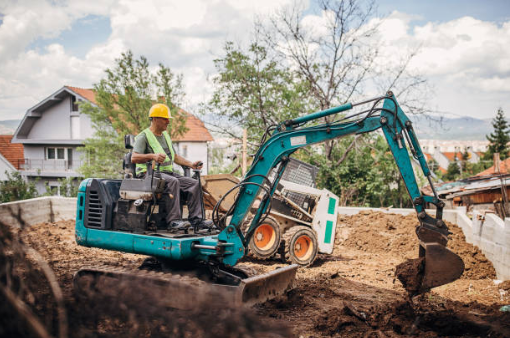
The 3-ton and under mini excavator segment has become an indispensable tool for municipal engineering, landscaping, indoor demolition, and rental fleets worldwide. These agile machines can access spaces larger equipment simply cannot reach.
With numerous models launched in 2025 now proven through a year of real-world operation, buyers face a crucial question: which machine truly offers the best mini excavator brand value in 2026? Should you choose electric or diesel? Which new technologies are genuine game-changers?
This article draws upon the latest market intelligence and product reviews from the past year to deliver an in-depth analysis of the most representative 2026 mini excavator models from five leading manufacturers—Caterpillar, Komatsu, Yanmar, Hitachi, and Volvo. We will not only present the specifications but also help you understand what those numbers mean for your specific application, enabling you to make an informed purchasing decision.
II. Key Technology Trends in the Under-3-Ton Micro Excavator Market (2025–2026)
Before diving into specific models, let’s review the three major trends that have reshaped the mini excavator comparison landscape over the past year:
Electrification Goes Mainstream:
2025 marked the breakthrough year for electric micro excavators. Models like the Volvo EC18 Electric, Komatsu PC-E Series, and Yanmar ViO17-1E have proven their reliability in the field, delivering zero emissions, ultra-low noise, and significantly lower operating costs—making them ideal for indoor, nighttime, and environmentally sensitive projects.
Smart Features Become Standard:
Advanced technologies once reserved for premium machines—electronic fencing, slope control, remote diagnostics—have now trickled down to the 3 ton excavator class. Caterpillar’s auto-limiting and Komatsu’s intelligent machine control lower the skill barrier while enhancing safety and precision.
Focus on Total Cost of Ownership:
Buyers now look beyond the initial price tag, prioritizing after-sales service, ease of maintenance, and residual value. Remote management tools like Yanmar’s SmartAssist and Hitachi’s LANDCROS have proven essential for optimizing fleet efficiency and minimizing downtime.
III. In-Depth Analysis: Top Models Launched in 2025
This mini excavator comparison will help you evaluate each contender side by side.
A. Caterpillar: The All-Rounder with a Proven Platform
Caterpillar’s reputation for reliability is backed by a global service network, and its “Next Generation” platform for compact excavators has delivered consistent performance throughout the past year.
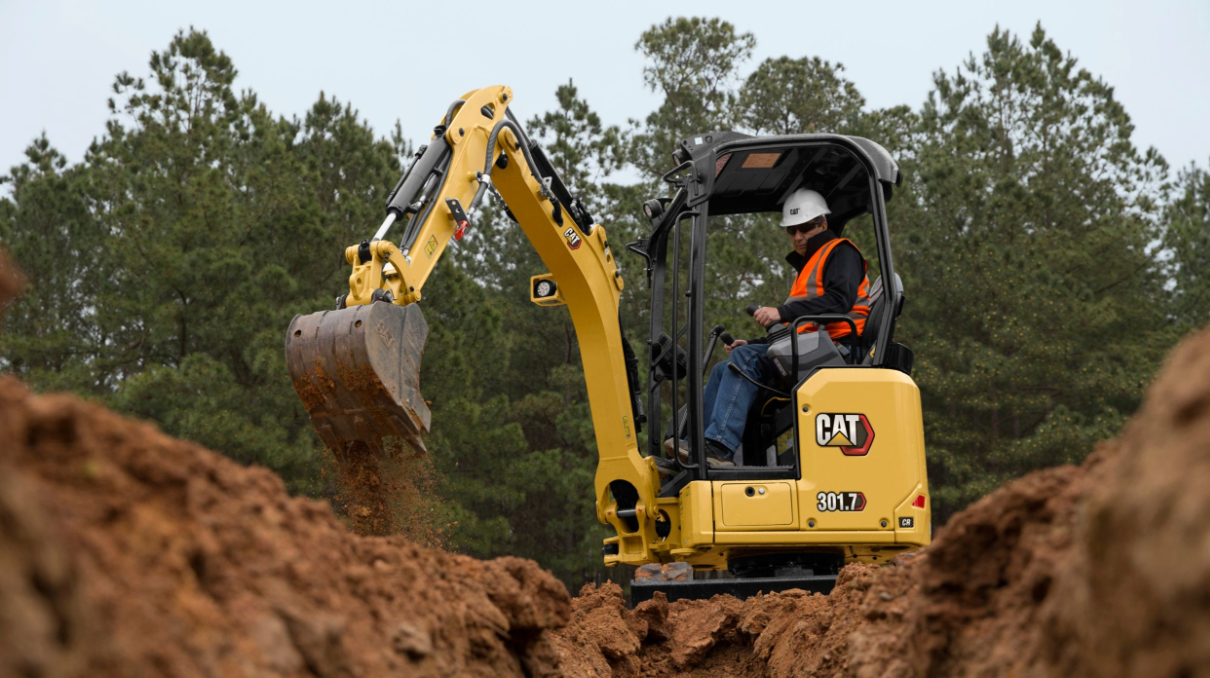
Representative Models: Cat 301.7D2, 301.8D2, 300.9D, 301.5, 301.7CR, 301.8, 302CR, etc. These models are part of its “Next Generation” compact hydraulic excavator platform.
Key Technologies and Performance:
Platform Design: Based on a unified “Next Generation” platform, achieving parts commonality and design consistency.
Operator Comfort: Emphasizes ergonomic cab design with StickSteer and cruise control, significantly reducing operator fatigue.
Serviceability: Tip-up cab for easy access to major components and ground-level daily inspection points.
Intelligent Assistance: Optional Ease-of-Use technology suite includes E-Fence, bucket/tilt assist for enhanced precision and safety, especially in confined spaces.
Efficiency: Uses engines meeting latest emission standards with optimized hydraulics for lower fuel consumption.
Key Specifications:
Cat 300.9D: ~0.9-ton class, 9.6 kW, dig depth ~1.73m.
Cat 301.5/301.7CR/301.8/302CR: ~1.8-2.3-ton class, ~15.7-17 kW, dig depth ~2.5m. Hydraulic system delivers precise response.
Market Positioning and Applications: Targets customers who value brand equity, reliability, and after-sales service. Key applications include municipal engineering, landscaping, residential construction, and rental fleets.
In the 2026 mini excavator market, Caterpillar remains a top choice for large rental companies and long-term investors, backed by its proven “Next Generation” platform.
B. Komatsu: Leading the Charge in Electrification
Komatsu’s strategic push into electrification with its PC-E Series has paid off. This electric lineup, alongside the upgraded PC24MR-5 diesel model, solidifies its position as a technology leader.
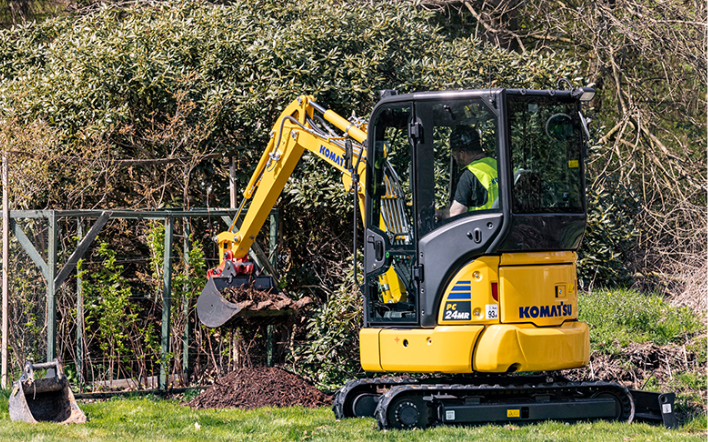
Representative Models: PC20E, PC26E, PC33E (new electric series), PC24MR-5 (upgraded diesel model).
Key Technologies and Performance:
Electrification Strategy: The PC-E electric series delivers zero-emission, ultra-low noise solutions with instant torque and simplified maintenance. Some models feature onboard chargers.
Intelligent Upgrades (Diesel): PC24MR-5 features standard rear-view camera, LED lighting, and optional Intelligent Machine Control for enhanced precision.
Hydraulic System: Load-sensing hydraulic system ensures smooth, efficient combined motion control.
Key Specifications:
PC24MR-5 (Diesel): ~2.4-ton class, 18.2 kW (Tier 4F).
PC-E Series (Electric): Specific motor power, range, and charging details pending official release, but long-range potential is emphasized.
Market Positioning and Applications: Targets customers seeking advanced technology and eco-compliance. Key applications include urban construction, indoor work, and rentals.
For customers seeking the best mini excavator brand, Komatsu’s forward-looking approach to electrification makes it an ideal choice for those pursuing cutting-edge technology.
C. Yanmar: The Compact Specialist with Smart Management
Yanmar’s expertise in compact machinery is well-established. The ViO17-1E electric model, with its zero-tail-swing design, and the ultra-compact SV08-1D have solidified their status as favorites among urban contractors.
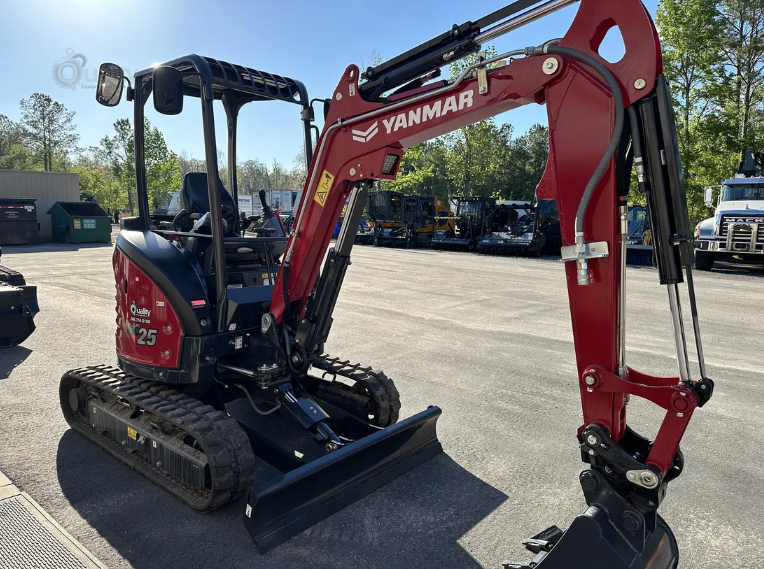
Representative Models: ViO17-6A, SV08-1D, ViO17-1E (electric), ViO25-6B, etc.
Key Technologies and Performance:
Ultra-Compact & Zero Tail Swing: ViO series features zero tail swing for unparalleled advantages in tight spaces. The SV08-1D represents an extremely small operating footprint.
Efficient Power & Fuel Economy: Equipped with Tier 4 Final engines and ECO mode (approx. 9% fuel savings).
Intelligent Remote Management: SmartAssist telematics system with 5 years free service provides real-time data, geofencing, and maintenance alerts.
Operation & Maintenance: Easy maintenance design, digital displays, quick couplers, and up to 4-year/4,000-hour warranty.
Key Specifications:
SV08-1D: ~1.06-ton class, ~7.7 kW, dig depth ~1.63m.
ViO17-1E (Electric): ~1.82-ton class, ~10.8 kW, dig depth ~2.31m.
ViO25-6B: ~2.7-2.8-ton class, ~15.2 kW, dig depth ~3.05-3.15m.
Market Positioning and Applications: Ideal for confined spaces such as urban pipeline work, indoor renovations, and landscaping. Perfect for fleet owners needing intelligent equipment management.
In any mini excavator comparison, Yanmar stands out for its zero-tail-swing design and SmartAssist telematics system.
D. Hitachi Construction Machinery: Master of Ergonomics and Versatility
The Hitachi ZX26U-5, launched in 2025, has garnered consistent praise for its operator-centric design. The 7-inch color display and dual-side entry are standout features that enhance usability.
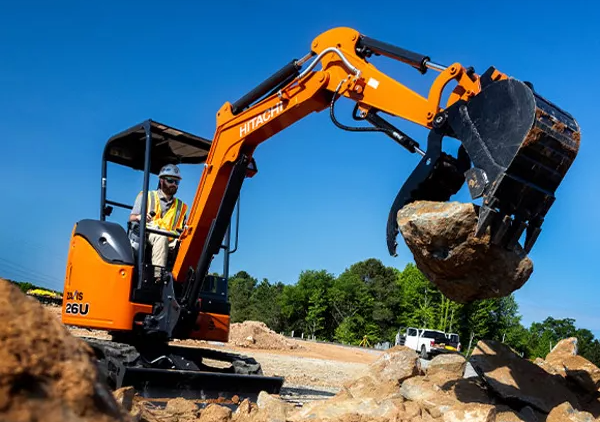
Representative Models: KTEG 10U SL (based on ZX10U-6), KTEG 19U (based on ZX19U-6), KTEG 23U / ZX26U MTC (based on ZX26U), etc.
Key Technologies and Performance:
Electrification Options: Multiple KTEG series models support zero-emission electric versions.
Ergonomics & Safety: Enhanced comfort with new seats, repositioned controls, and dual-side entry (10U SL) for easier cab access. Two-piece boom (19U) enhances flexibility.
Versatility: MTC models feature KTEG OQR quick-change system with 360° attachment rotation.
Enhanced HMI: 7-inch color display with rotary dial for hydraulic adjustment.
Digital Ecosystem: LANDCROS system for remote equipment monitoring and management.
Key Specifications:
ZX26U-5 (for reference): ~2.54-ton class, 16.1 kW, dig depth ~2.4m, dig radius ~4.2m.
Specific parameters for electric versions not detailed.
Market Positioning and Applications: Suitable for urban construction, landscaping, and multi-task operations in confined spaces. Ideal for customers who value operational convenience and advanced HMI.
For users prioritizing operational convenience and human-machine interaction, the Hitachi ZX26U-5 stands out as a strong contender for best mini excavator.
E. Volvo: The Green Pioneer for Sensitive Environments
The Volvo EC18 Electric, one of the first mass-produced electric micro excavators on the market, has become the benchmark for sustainable construction equipment after a year of rigorous field testing.

Representative Models: Volvo EC18 Electric, EC18E, EC20E (upgraded models).
Key Technologies and Performance:
Electrification Pioneer: EC18 Electric delivers zero emissions, ultra-low noise, and low vibration.
Battery & Charging: 48V, 20 kWh battery with up to 6 hours runtime. Fast charging in approximately 1 hour 15 minutes.
Targeted Application: Factory-installed straight boom option for indoor demolition and low-headroom applications.
Operation & Safety: Advanced HMI and high safety standards. Compliant with Tier 4 emissions.
Key Specifications:
EC18 Electric: Operating weight ~1.96 tons, dig depth ~2.5-2.7m, bucket force ~12.9 kN. Battery: 48V, 20 kWh, runtime up to ~6 hours. Fast charge ~1 hour 15 minutes (to 80%).
EC18E/EC20E: ~2-ton class, dig depth >3m.
Market Positioning and Applications: Perfect for noise and emission-sensitive environments such as city centers, hospitals, schools, and indoor demolition.
This mini excavator buying guide highlights that the Volvo EC18 Electric provides an ideal zero-emission solution for environmentally sensitive work sites.
IV. High-Value Buyer’s Guide: How to Choose Based on Real-World Feedback
Drawing from a full year of market feedback, here’s how to translate specifications into the right purchase for your needs. A reliable mini excavator buying guide should focus on these key decision points:
Zero Tail Swing vs. Conventional:
Market feedback confirms that if 90% of your work is in tight quarters (indoor, narrow streets, landscaping), zero tail swing is a mandatory feature for both productivity and safety. For more open environments, a conventional model may offer better stability and a lower price point.Electric vs. Diesel: A Critical Decision:
Choose Electric: If you have reliable access to charging, work in noise/emission-sensitive areas, and your typical workday is within 6 hours. Models like the Volvo EC18 Electric and Yanmar ViO17-1E have proven their worth, with owners reporting energy costs approximately one-third that of comparable diesel machines. This is a key factor in any mini excavator comparison.
Choose Diesel: If your work sites are varied, require continuous operation over long hours, or involve heavy digging. The Caterpillar, Komatsu, and Hitachi diesel models remain the standard for their proven reliability and stable resale value. These 3 ton excavator models continue to dominate the traditional market segment.
The Real Value of Smart Features:
For new operators or those working in complex environments, smart features like Caterpillar’s E-Fence provide invaluable peace of mind.
For fleet owners, remote management systems like Yanmar’s SmartAssist and Hitachi’s LANDCROS have shown a clear return on investment over the past year by maximizing uptime and simplifying maintenance scheduling.
V. Why Choose Qhmach? A Cost-Effective Alternative for Your Mini Excavator Needs
While the global brands discussed above represent the pinnacle of engineering and technology, we understand that not every buyer’s budget aligns with premium-tier pricing. If you are seeking affordable quality without compromising on performance, Qhmach (Qinghai Machinery) offers a compelling range of mini excavators tailored to meet diverse operational needs.
As a manufacturer specializing in compact construction equipment, Qhmach provides a variety of mini excavator models designed for durability, efficiency, and ease of operation. Their product lineup includes:
1 Ton Crawler Excavator (WW010) – Ultra-compact, ideal for the tightest indoor and landscaping jobs.
1.7 Ton Mini Excavator (WW016) – EU Stage V emission compliant, balancing power with environmental responsibility.
1.8 Ton Mini Excavator (WW018) – Powered by a YANMAR engine, delivering reliable performance for rental and small contracting work.
1.8 Ton Mini Excavator (WW020) – Also EU Stage V certified, offering advanced emission control for European markets.
4 Ton Mini Excavator (WW040) – A step up in power with a YANMAR engine, suitable for more demanding site work.
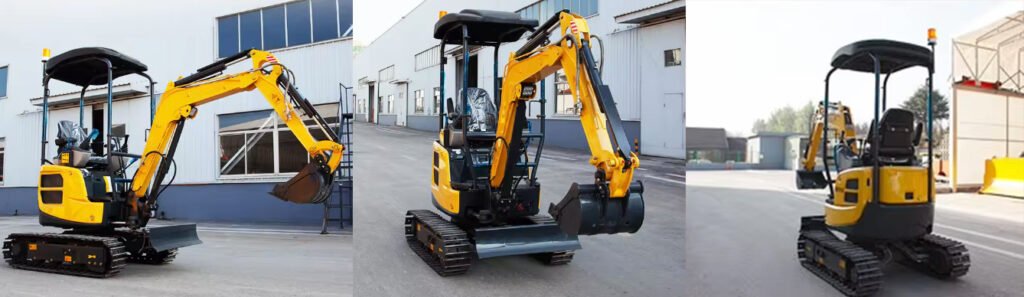
All Qhmach mini excavators are built with a focus on cost-effectiveness, robust construction, and easy maintenance. Whether you need a standard model or a machine customized to your specific application—such as specialized attachments, paint schemes, or emission configurations—Qhmach offers flexible OEM and customization services.
VI. Summary & Final Recommendations
The 2026 market offers a range of proven, high-performance machines. The electrification and smart technology that were emerging trends just a year ago are now standard features you can rely on.
| Buyer Profile | Recommended Model | Key Benefits |
|---|---|---|
| Large Rental Companies & Value-Conscious Investors | Caterpillar Next Generation (301.7CR, 300.9D) | Safe, high-residual-value investment; global service network; strong candidate for best mini excavator brand based on longevity |
| Urban Contractors Working in Tight Spaces | Yanmar ViO17-1E | Unparalleled compactness (zero tail swing); SmartAssist intelligent fleet management; lower operational costs |
| Environmentally Focused & Indoor Operators | Volvo EC18 Electric / Yanmar ViO17-1E | Quiet, clean, comfortable operation; mature battery and fast-charging technology; ideal for sensitive environments |
| Operators Prioritizing Ergonomics & User Experience | Hitachi ZX26U-5 | Dual-side entry for easy cab access; 7-inch color display; operator-friendly design with excellent user feedback |
The 2026 market offers a range of proven, high-performance machines. The electrification and smart technology that were emerging trends just a year ago are now standard features you can rely on.
Frequently Asked Questions (FAQ)
1. What are the main applications for under-3-ton mini excavators?
Municipal engineering, indoor demolition, landscaping, agricultural applications, and small construction site rentals.
2. How do I choose between electric and diesel?
Electric: Ideal for indoor/night work. Zero emissions, low noise, and lower energy costs (approx. 1/3 of diesel), but requires access to charging.
Diesel: Ideal for remote sites and long, continuous shifts. Offers strong range and stable resale value.
3. What is “zero tail swing”?
It means the machine’s rear end does not swing beyond the width of the tracks when rotating 360 degrees, a crucial feature for working in tight spaces. Yanmar ViO series is a prime example.
4. What should I consider beyond the purchase price?
After-sales service network, ease of maintenance, operator comfort, smart technology features, and expected residual value.
5. What were the biggest market changes in 2025-2026?
Mainstream adoption of electric models, proliferation of smart features, increased focus on total cost of ownership, and the proven value of remote management systems.
6. Do I need a special license to operate a mini excavator?
In many regions, a specialized operator certification or license is required. Check with your local dealer or relevant authorities for specific regulations.
7. How do I charge an electric mini excavator?
You can use a standard 220V outlet for slow charging or install a fast charger (typically 1-2 hours to 80%). The Volvo EC18 Electric, for example, reaches 80% in about 1.25 hours.
8. What is the typical lifespan?
A well-maintained diesel machine can last 8,000 to 12,000 hours. For electric models, the battery is designed for 2,000 to 3,000 charge cycles, which typically translates to 5-8 years of normal use.
We hope this mini excavator buying guide helps you find the perfect machine for your needs in 2026. Feel free to leave a comment if you have further questions.