I. Introduction
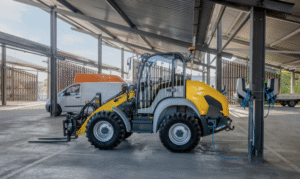
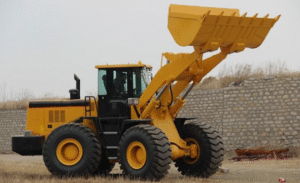
In construction and engineering operations, the wheel loader machine stands as a core piece of equipment. With technological advancements and increasing environmental requirements, the electric wheel loader is becoming more prevalent, creating a direct comparison with the traditional diesel loader. The choice best front loader for your project directly impacts operational costs, compliance, and efficiency. This article provides a clear, objective analysis of their core differences and suitable applications through data and scenario evaluation, aiming to offer a rational reference for equipment selection and avoid common pitfalls.
II. Core Differences Between Electric and Diesel Loaders
1. Operational Costs: The Electric Wheel Loader Offers Significant Economy
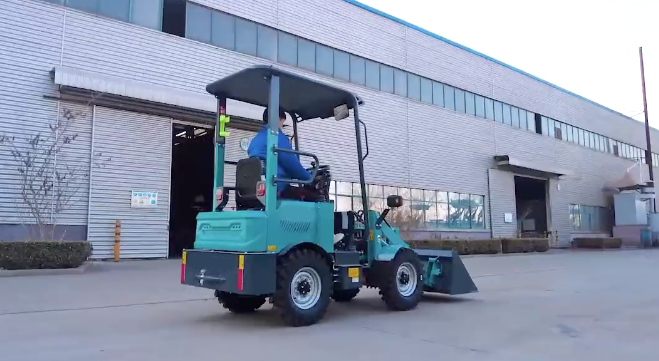
Energy Costs: Based on 8 hours of daily operation and 300 working days per year, the annual fuel cost for a diesel loader ranges from approximately 28,800 to 34,500 CNY. For an electric wheel loader, the annual electricity cost is only 10,800 to 12,000 CNY, representing a 60%-65% reduction in energy cost.
Maintenance Costs: A diesel loader requires regular replacement of engine oil, filters, etc., with an annual maintenance cost of about 8,000-10,000 CNY. The electric wheel loader has no complex drivetrain components like an engine or transmission. Maintenance primarily involves the battery and electrical systems, with an annual cost of about 2,000-3,000 CNY—a reduction of approximately 70%.
2. Performance & Operator Experience: Distinct Characteristics
Noise Levels: Operation noise for a diesel loader is typically 85-95 dB, while an electric wheel loader reduces this to 55-65 dB—a 30%-40% reduction—making it more suitable for indoor sites or areas near residences.
Operational Characteristics: The electric wheel loader offers rapid response, smooth acceleration, and no gear-shift jerk, reducing operator fatigue. Its motor provides instant maximum torque, and its heavy-load and climbing capabilities are not inferior to those of a diesel loader.
III. Application Scenarios and Selection Considerations
1. Prime Application Scenarios for the Electric Wheel Loader
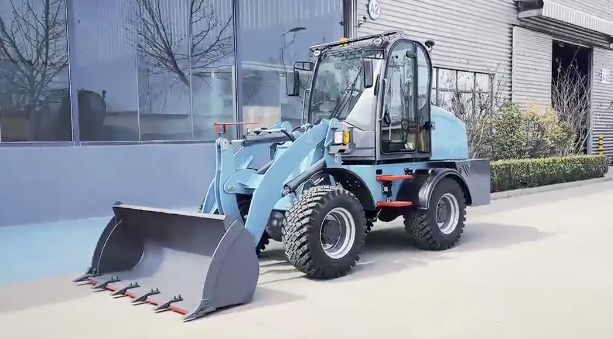
Ideal for sites with fixed locations, convenient power supply, and clear environmental or noise requirements. Examples include material handling within ports, steel plants, mining yards, concrete mixing stations, and food & beverage industrial warehouses.
Suitable for users with long daily operating hours who are sensitive to total life-cycle cost. The higher initial purchase price can be offset by long-term savings in energy and maintenance.
2. The Irreplaceable Domain of the Diesel Loader
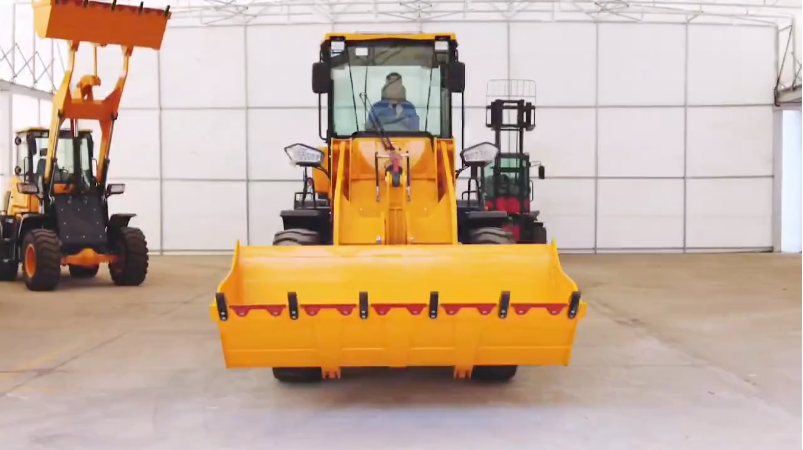
Necessary for remote, highly mobile job sites with poor power infrastructure. Examples include road/railway construction, water conservancy projects, and temporary work sites in the early stages of a project.
Essential for scenarios requiring 24/7 continuous operation where refueling convenience is paramount, as well as in extreme climates (e.g., severe cold) where battery performance can be significantly impacted.
A more economical initial choice for users with limited annual usage, tight upfront budgets, or reluctance to invest in power infrastructure upgrades.
IV. How to Choose? Making the Choice Best Front Loader for Your Needs
1. Prioritize the Electric Wheel Loader if most of these conditions apply:
Your job site is fixed and enclosed (e.g., factory, port, material yard).
You have stable, sufficient power supply or access to a battery swap station nearby.
There are strict environmental or noise requirements (e.g., municipal projects, food industry).
The equipment usage intensity is high (long annual operating hours), with a strong need to reduce long-term total cost of ownership.
The project location has clear environmental restriction policies or offers subsidies for electric equipment.
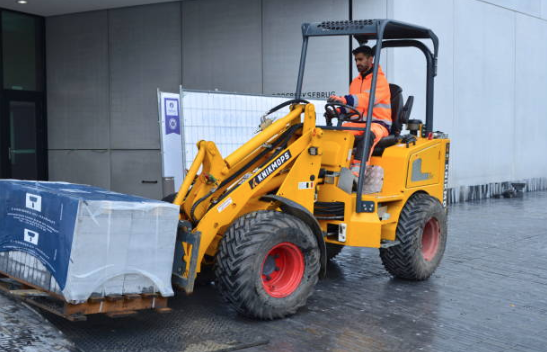
2. The Diesel Loader remains the more pragmatic choice if your scenario features:
Highly variable, remote job sites with unreliable power access.
A need for 24-hour uninterrupted operation or highly irregular schedules where refueling convenience is critical.
Tight initial project budgets and relatively short annual equipment usage, making it difficult to quickly recoup the electric model’s initial premium.
Operations in extremely cold or harsh environments where equipment power stability and environmental adaptability are paramount.
3. General Decision-Making Principles:
Calculate Total Cost of Ownership (TCO), not just sticker price: Compare the total lifecycle cost over 3-5 years, including fuel/electricity, maintenance, purchase price, and potential policy subsidies/penalties.
Infrastructure First: Before considering electrification, thoroughly assess on-site power capacity and charging solutions.
Consider Policy Risk: Research current and future local environmental regulations for non-road mobile machinery to evaluate the long-term usage risks associated with diesel equipment.
V. Conclusion
The electric wheel loader and diesel loader complement each other in different scenarios. Electric models lead in fixed, high-intensity, or noise-sensitive sites due to lower costs and better operability. Diesel units remain essential for mobile, remote, or continuous work where refueling and ruggedness are priorities.
The trend is toward “electric dominant, diesel supplemental.” To maximize efficiency, base your choice best front loader on a full analysis of your job needs, total costs, and operational environment.
Qhmach, as an engineering machinery manufacturer with over 40 years of experience, offers a comprehensive range of construction equipment. If you have any questions or needs regarding wheel loader selection or application, please feel free to contact us. Our team of mechanical engineers will provide you with professional answers and support.
Appendix: Quick-Reference Comparison of Core Dimensions
| Dimension | Electric Wheel Loader | Diesel Loader |
|---|---|---|
| Op. Cost | Very Low • Electricity ~1/3 of fuel cost • Maintenance cost ~70% lower | Higher • Subject to fuel price volatility • More frequent, costly maintenance |
| Environ. Comp. | Zero Emission • No tailpipe pollution • Policy subsidies available • No area restrictions | Emission Restricted • Produces pollutants • No subsidies • Restricted in “non-road” zones |
| Performance | Better Experience • 30-40% lower noise • Fast response, smooth operation • Instant high torque | Traditional & Reliable • Higher noise levels • Gear-shift jerk • Proven, stable technology |
| Application | Fixed/Enclosed Sites • Ports, mines, factories • Eco-sensitive areas • Areas with good power supply | Mobile/Open Sites • Remote construction sites • Poor infrastructure areas • Extreme climates |
| Refueling | Requires Planning • Depends on charging facilities • Charging takes time (1-2h fast charge) • Range consideration | Refuel & Go • Widespread fuel stations • No range anxiety • Suitable for continuous ops |
| Initial Invest. | Higher • 30-50% higher purchase price • Possible grid upgrade investment needed | Lower • Lower purchase threshold • No extra infrastructure investment |
| Long-term TCO | Clear Advantage • Recoup price difference in 1-3 years • Lower total lifecycle cost | Ongoing Expense • Continuous fuel & maintenance costs • Higher total lifecycle cost |
| Policy Outlook | Positive • Aligns with green trends • Strong policy support • Low long-term use risk | Facing Restrictions • Tightening environmental policies • Potential usage scope reduction • Phasing-out risk |