Table of Contents
I. Introduction
Asphalt compactor roller is crucial equipment in asphalt pavement construction. Insufficient compaction increases the porosity of the asphalt pavement, allowing air and rainwater to more easily penetrate the pavement structure, accelerating asphalt mixture aging and water damage. Over-compaction, on the other hand, leads to aggregate particle breakage and disrupts the mixture gradation. Both over- and under-compaction negatively impact the construction quality and pavement durability of the asphalt mixture.
This article, through theoretical and experimental analysis, explores the compaction mechanisms and characteristics of two commonly used road rollers: pneumatic tire rollers (PTR roller) and vibro road roller, aiming to provide a reference for developing more effective compaction strategies.
II. Roller Mechanisms: Structure and Principles
2.1 PTR Roller: Structure and Compaction Mechanism
2.1.1.What is a pneumatic tire roller?
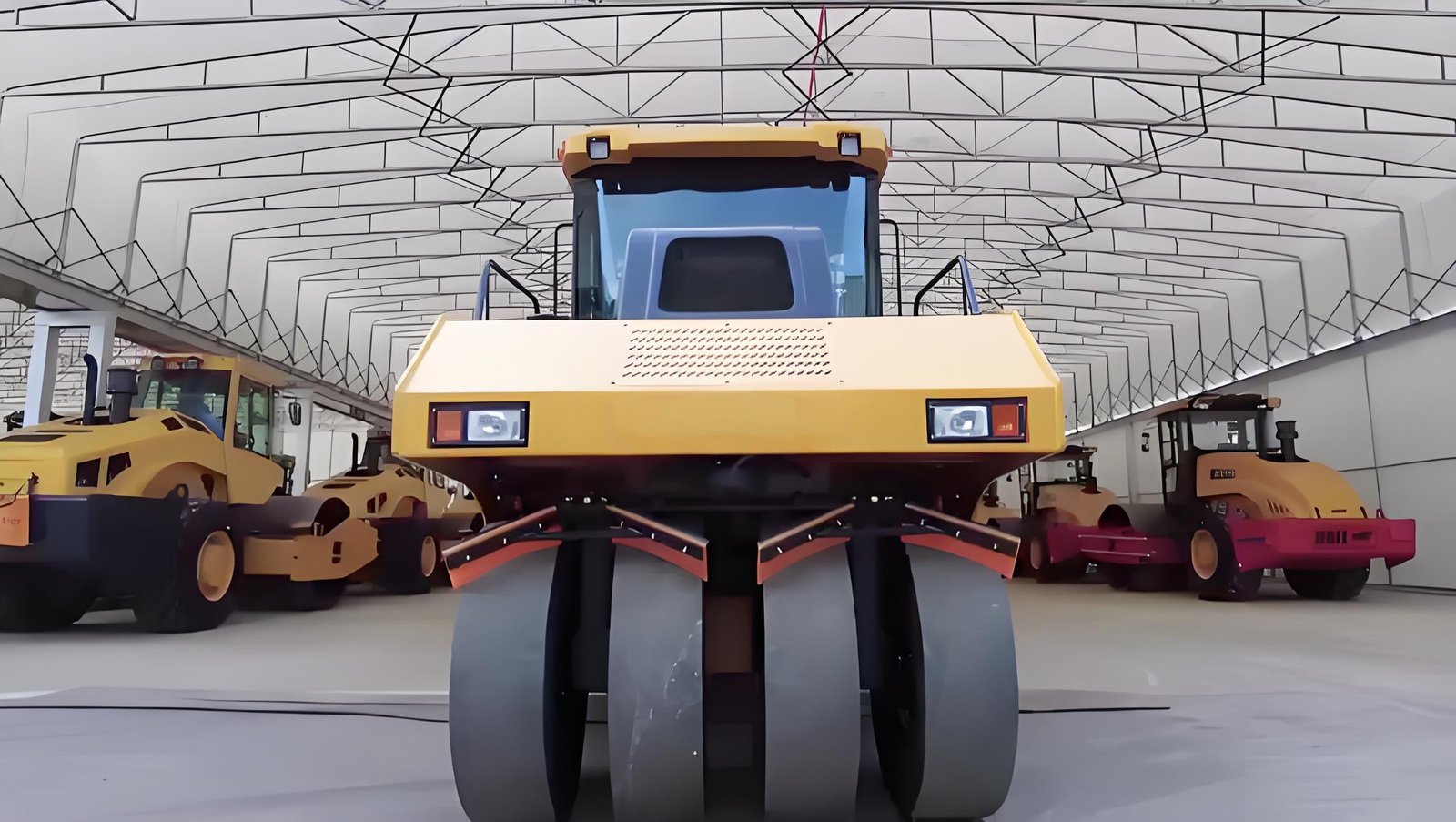
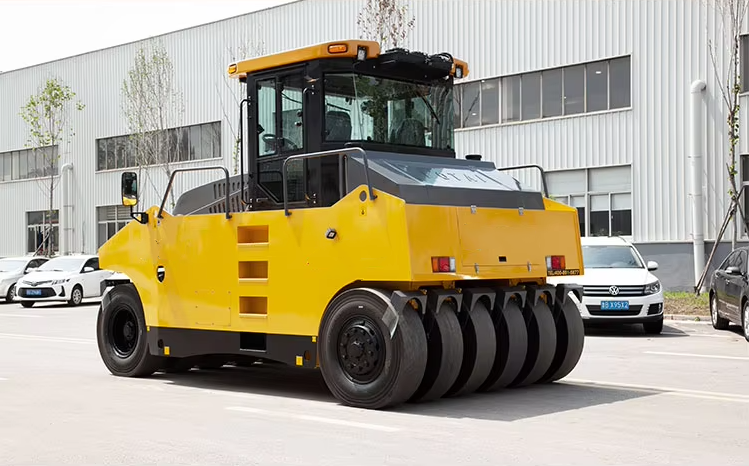
A pneumatic tire roller consists of a frame, engine, transmission, steering, braking system, water ballast system, and specialized rubber tires. Medium-sized models typically have four front and four to five rear tires, while heavy-duty versions feature five front and five to six rear tires, arranged in a staggered pattern for uniform pressure distribution.
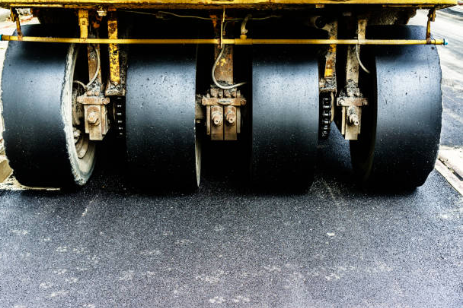
2.1.2 PTR roller have a kneading effect during the compaction of road mixtures
During the compaction operation, the tires exert two forces on the material being compacted: one is a static force that is vertically downward generated by gravity, and the second is a horizontal force:
- Vertical Force: Generated by the roller’s weight, this static force applies a vertical load to the asphalt mix. It induces shear stress that overcomes cohesion and internal friction between particles, enabling smaller aggregates to fill voids and achieve densification.
- Horizontal Force: Comprising two components:
- Deformation Force: As an inflated tire deforms under load, it exerts an outward horizontal force on the mix during entry into the contact zone. This force intensifies with increasing contact area and diminishes as the tire exits the zone and regains shape.
- Driving Force: The driven wheels generate a force opposite to the direction of travel, while idle wheels produce a force in the same direction.
In summary, the combination of vertical and horizontal forces creates a kneading action that thoroughly works the asphalt mixture.
2.2 Vibro Road Roller: Structure and Compaction Mechanism

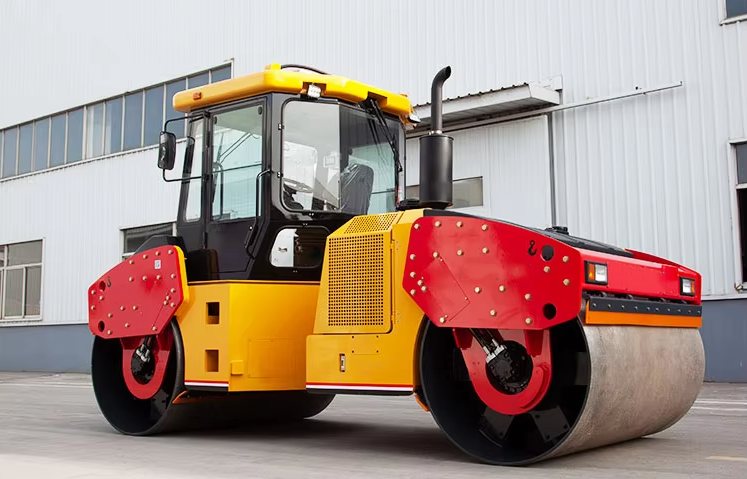
A vibratory road roller includes a frame, engine, transmission, steering, travel system, brakes, vibration mechanism, water spray system, and steel drums. Its key component is the vibrating drum, which houses an eccentric weight. When rotated, this weight generates high-frequency vibrations transmitted to the asphalt.
III. Road Roller Compaction Characteristics
3.1 Key Characteristics of Pneumatic Tire Roller
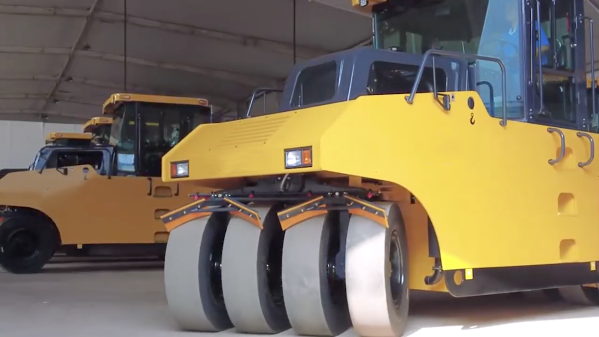
- Eliminates Cracking:
When asphalt is too hot or lacks stability, vibratory rolling can cause layer slippage and surface cracking. Tire rollers, through their kneading action, can rework and heal these cracks, restoring surface integrity. - Promotes Asphalt Migration:
At high temperatures, asphalt acts as a lubricant, aiding compaction. The kneading action of tire rollers mimics the “vibration” in concrete work, driving free asphalt upward. This creates a dense, impermeable surface layer that resists water infiltration and reduces moisture damage. Uniform Compaction:
Steel drums can “bridge” over large aggregates or uneven surfaces (e.g., at longitudinal joints), leading to inconsistent density. The independent suspension of tire rollers allows each wheel to maintain contact with uneven surfaces, ensuring uniform pressure and compaction across variable mat thicknesses.- Rapid Force Attenuation and Lower Efficiency:
Compactive force from tire rollers diminishes rapidly with depth. Research shows that at depths greater than 15 times the tire width, the effect becomes negligible. This limits their effective compaction depth and overall efficiency.
3.2 Key Characteristics of Vibratory Road Rollers
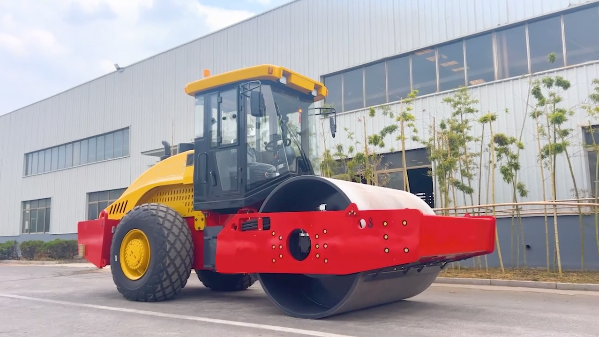
Qhmach 20 Ton Single Drum Vibratory Roller WS205HD-2
Every material has a natural frequency. Vibratory road rollers apply a periodic excitatory force. When this force matches the material’s natural frequency, resonance occurs. This phenomenon drastically reduces internal friction and cohesion between aggregate particles, allowing them to rearrange into a denser configuration. Therefore, vibratory Road rollers can achieve higher efficiency, higher density, and deeper compaction.
3.3 Comparative Analysis: Pneumatic Tire Roller vs. Vibratory Roller
| Characteristic | Vibratory Roller | Pneumatic Tire Roller |
|---|---|---|
| Efficiency | High | Low |
| Density Gain | Fast | Slow |
| Compaction Depth | Deep, slow attenuation | Shallow, rapid attenuation |
| Surface Sealing | Limited | Excellent (promotes asphalt migration) |
| Crack Healing | No | Yes |
| Uniformity on Uneven Surfaces | Poor | Excellent |
Conclusion:
Vibratory rollers excel in efficiency and achieving deep density but cannot remedy surface cracks. Tire rollers provide superior kneading action, healing cracks, sealing the surface, and ensuring uniformity but are less efficient.
IV. Recommended Best Road Roller Compaction Strategy
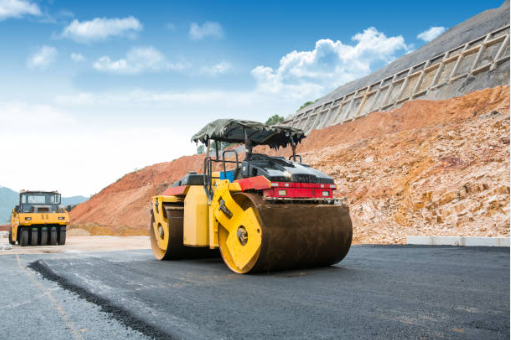
For hot mix asphalt (excluding SMA mixes), a combination rolling technique is highly recommended:
1. Use a vibratory roller for intermediate (breakdown) compaction to achieve rapid density and depth.
2. Follow immediately with a pneumatic tire roller in the intermediate or finish stage to knead the mat, eliminate any cracks, and create a sealed, dense surface.
This combined approach leverages the strengths of both roller types, ensuring high density, improved durability, and superior surface performance.
V. Conclusion
Different types of compaction equipment operate on different principles, generating forces of varying natures. These different forces, in turn, produce distinct effects on the asphalt mixture. To achieve superior results, identifying the best road roller for each compaction phase is crucial. Therefore, during construction, equipment should be scientifically selected and strategically combined according to specific stage requirements. This approach fully leverages the unique advantages of each roller type, ultimately ensuring the road surface achieves optimal compaction quality and long-term durability.