This article explores the growing demand for Chinese road roller compactor in the international market, highlighting their efficient performance, competitive pricing, and continuously improving technical standards. It discusses important considerations when selecting equipment, understanding international trade terms, and evaluating suppliers. It also details the export process, required documentation, and shipping methods, emphasizing the importance of properly packaging and securing the road roller. Customs clearance, cost control, and risk management strategies are also covered. The guide concludes with a checklist to ensure a smooth procurement and shipping process and encourages readers to contact Qhmach for assistance with their road rollers.
I. Introduction
In recent years, demand for Chinese road roller compactor has continued to rise in the international market. Thanks to their efficient performance and reliable quality, Chinese-made road rollers have gradually become the preferred equipment for infrastructure construction in many countries. China road rollers are not only competitively priced, but also boast continuously improving technical standards and after-sales service. This article provides information on transportation issues and related recommendations when buy road roller from China.
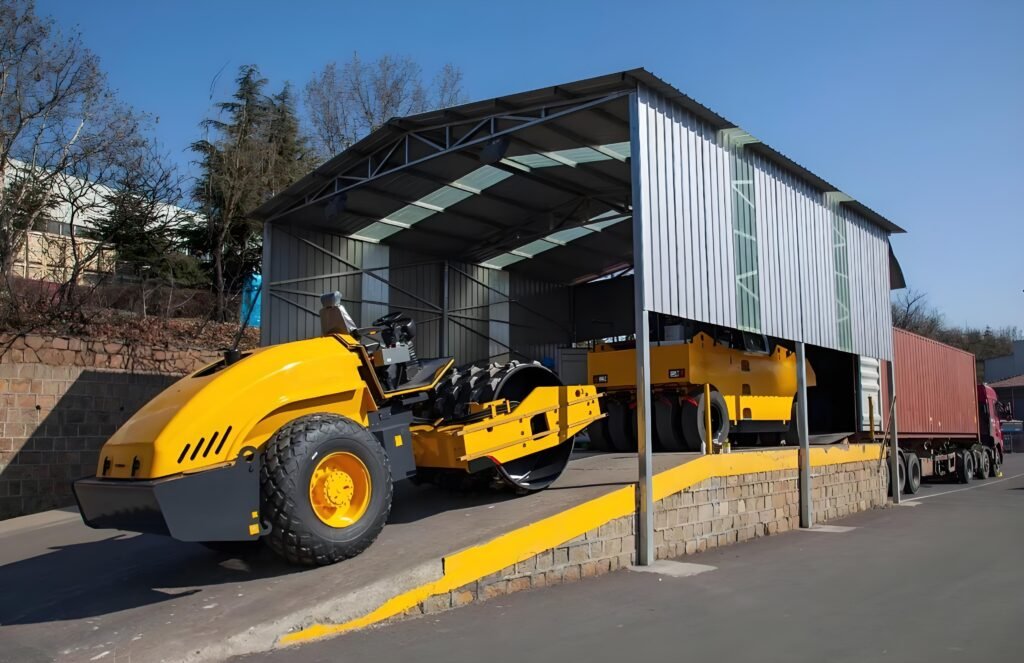
II. Overview of China road roller exports
2.1 Basic concepts and classification of road rollers
Rollers are essential heavy machinery in construction projects, primarily used to compact foundation materials such as soil and asphalt. Based on their structural characteristics and applications, they can be divided into three main types: single drum road rollers are suitable for roadbed compaction, effectively compacting deep soil layers with their high linear pressure; double drum road rollers are designed specifically for asphalt pavement compaction, using a dual-wheel vibration system to achieve smooth and dense surface finishes; and tire rollers use pneumatic tires as the compacting mechanism, achieving uniform compaction through the kneading action of the tires, making them particularly suitable for final compaction of various materials. This type of construction machinery is widely used in projects such as road construction, airport runways, and parking lots.
2.2 Market advantages of China’s road roller exports
China road roller have significant competitive advantages in the global market. First, a comprehensive industrial chain and large-scale production capacity make their products highly competitive. Second, their product line is comprehensive. As a road roller manufacturer, Qhmach offers a wide range of products, from heavy-duty rollers for large-scale projects to smaller rollers for municipal projects , meeting the diverse needs of different customers. Furthermore, in recent years, Chinese road roller manufacturers have continuously improved product quality. Many companies have obtained international quality system certifications, and their product performance has reached internationally advanced levels. A comprehensive supporting service offering is also a key advantage, with increasingly professional services throughout the entire process, from procurement to export.
III. Preliminary preparations
3.1 Key points for equipment selection
When selecting a roller, multiple factors must be considered. Site conditions directly influence equipment selection; for example, narrow construction spaces may necessitate a small road roller or a walk behind roller . The weight and dimensions of the equipment not only impact performance but also directly influence subsequent transportation costs and design options.
3.2 Analysis of Incoterms
Correctly understanding international trade terms is crucial for any transaction. EXW terms mean the buyer bears all costs and risks from the moment the goods are picked up at the factory, making them suitable for buyers with extensive international trade experience. FOB terms require the seller to be responsible for transporting the goods to the port of shipment and completing their loading. Risk transfers to the buyer once the goods pass the ship’s rail, balancing responsibilities and risks for both parties. Under CIF terms, the seller pays freight to the port of destination and arranges insurance, but the risk remains at the port of shipment. Buyers should be aware that insurance coverage may be less comprehensive. Qhmach offers various road roller transportation solutions tailored to customer needs.
3.3 Supplier Selection and Evaluation
Finding reliable suppliers requires multiple channels. Professional B2B platforms can provide extensive supplier information, while industry exhibitions and on-site visits provide a more direct understanding of supplier capabilities. When evaluating suppliers, it’s important to review documents such as their business licenses and export qualifications , as well as reference customer reviews and past cooperation experiences. Suppliers with relevant quality certifications can generally provide a better guarantee of product quality and after-sales service.
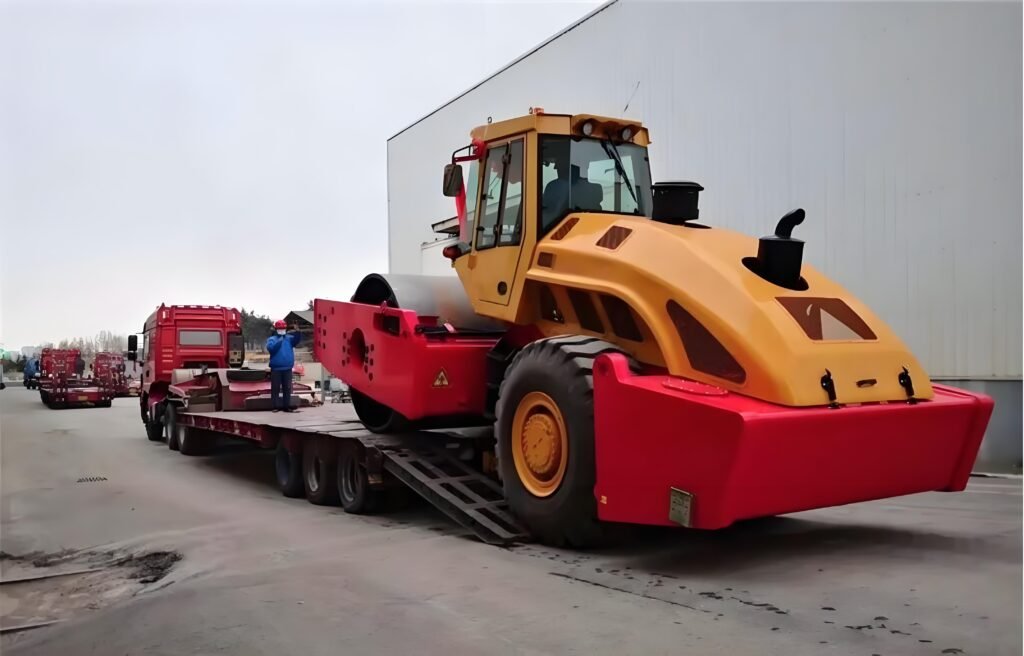
IV. Road roller export process and document preparation
4.1 Necessary export documents
The export of road rollers requires comprehensive documentation. The commercial invoice should detail the transaction, including product specifications and pricing terms. The packing list should accurately record packaging details and loading conditions. The export declaration form must accurately declare the goods in accordance with customs requirements. Freight forwarders often assist in preparing these documents, but exporters are still responsible for ensuring the accuracy and completeness of the information.
4.2 Import requirements of the destination country
Different countries have their own regulations regarding the importation of road rollers. Some countries require importers to obtain import licenses in advance, particularly for heavy machinery. Products must comply with the destination country’s technical standards and safety regulations, including emission requirements and safety features. Understanding and meeting these requirements in advance can help avoid the risk of customs clearance issues upon arrival.
V. Road roller machine transportation plan selection
5.1 Detailed explanation of sea transportation plan
Ocean freight is the most common mode of transport for exporting Qhamch road rollers . Full container load (FCL) shipping is suitable for sufficient cargo volume, ensuring cargo safety and timely delivery. When the cargo volume is less than a full container load, less than a container load (LCL) shipping is a more economical option, but consideration should be given to the potential transit time and cargo safety risks. When choosing an ocean freight option, consider the equipment size, transportation time, and budget .
5.2 Comparison of other modes of transportation
While air transport offers the fastest timeframe, it’s also more expensive and is generally only suitable for emergencies or small equipment. The China-Europe Express, as an emerging mode of transport, strikes a good balance between speed and cost, making it particularly suitable for transport to inland areas of Europe. Road transport, primarily serving neighboring countries bordering China, offers flexibility and convenience.
VI. Qhmach operating specifications when transporting road roller compactor
6.1 Professional Packaging
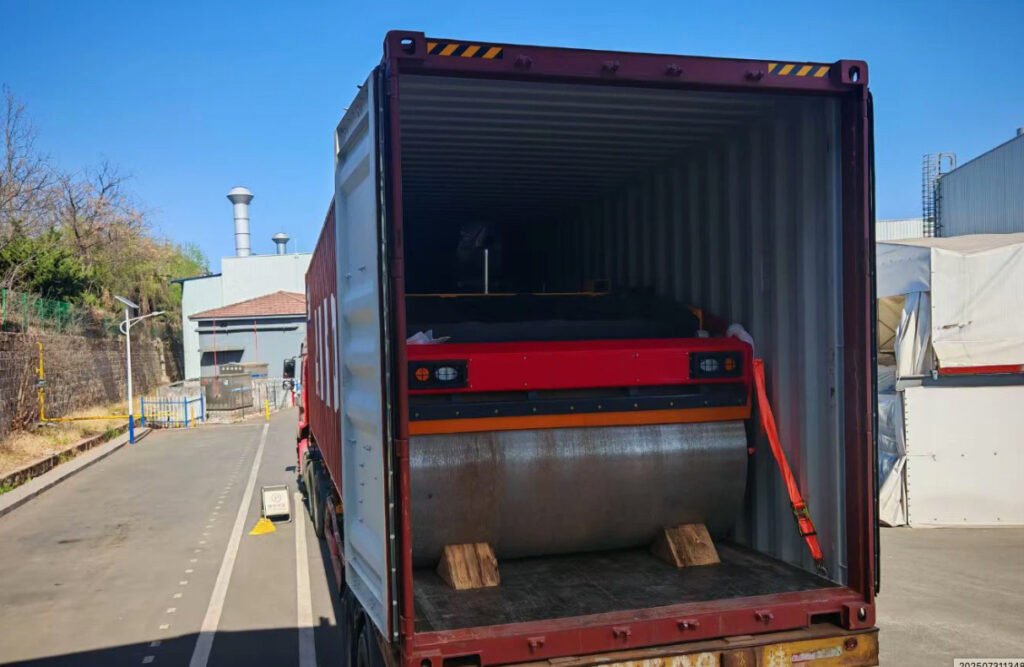
The packaging of road rollers requires special precautions. Qhamch packages precision instruments and electrical systems with waterproof seals and sprays exposed metal parts with rust inhibitors. Before shipment , we thoroughly clean the equipment to ensure it is free of dirt and oil residue. These measures effectively prevent damage to the roller during transportation.
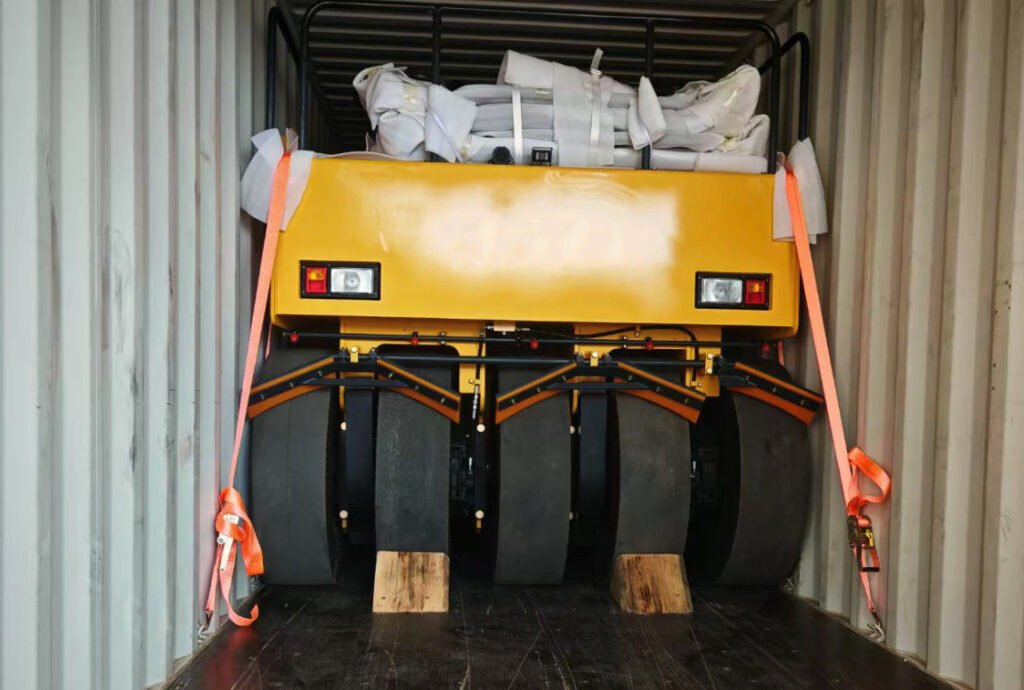
6.2 Loading and fixing technology
Proper loading and securing of the roller is crucial for safe transportation. We use specialized straps and fixings to secure the equipment securely within the container. The rollers must also be locked to prevent rolling during transport. Proper force distribution and multiple fixing mechanisms effectively prevent the equipment from shifting or tipping over during transport.
VII. Analysis of customs clearance process
7.1 China Export Customs Clearance
Export customs clearance involves multiple steps. Freight forwarders handle the bulk of the work, but they rely on accurate documentation from the exporter. Customs clearance typically takes 1-3 business days, but delays may occur if there are documentation issues or customs inspections.
7.2 Key points for customs clearance in the country of destination
Import customs clearance requires special attention to tax issues. It’s crucial to accurately understand the destination country’s tariff rates and VAT policies. Customs may inspect the goods to verify that the actual goods match the declared information.
VIII. Cost Control and Risk Management
8.1 Transportation Cost Composition
Shipping costs are influenced by multiple factors. The size and weight of the roller determine the base freight rate, while the shipping route and method also impact the total cost. Furthermore, factors like fuel surcharges and exchange rate fluctuations must be factored into your budget. Qm a ch will request a detailed price breakdown from your freight forwarder to help you better manage costs.
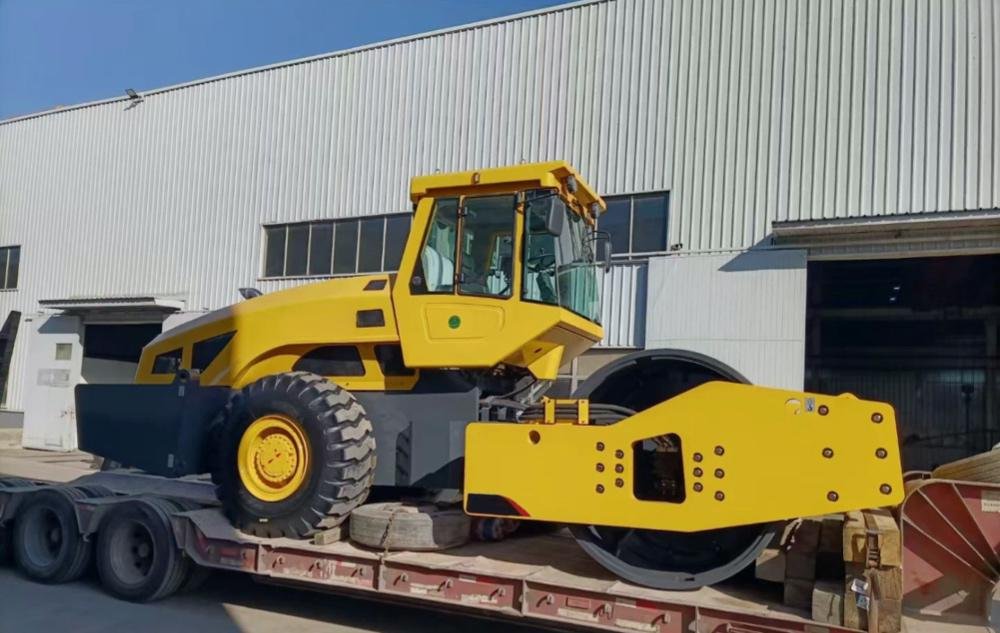
8.2 Insurance Protection Strategy
It’s crucial to purchase appropriate shipping insurance. All-risk insurance provides the most comprehensive coverage, covering all types of loss and damage that may occur during transportation. Upon receipt of the roller , you should promptly inspect it and retain documentation. If any damage is discovered, file a claim promptly.
VX. Transportation process monitoring
9.1 Estimated shipping time
Shipping times vary significantly depending on the mode of transport. Ocean freight from China to Southeast Asia typically takes 1-2 weeks, to Europe 4-6 weeks, and to the Americas 3-5 weeks. Rail freight to Europe takes approximately 2-3 weeks. These estimated times can help you plan your shipment accordingly.
9.2 Cargo Tracking Management
Modern logistics systems offer comprehensive tracking services. Using the tracking number provided by the freight forwarder or shipping company, you can track the location and status of your shipment in real time. You can also use real-time tracking tools and apps to stay informed about the status of your shipment.
X. Delivery at destination
10.1 Selection of unloading method
You can choose from a variety of unloading options based on your needs. Picking up your cargo at the port is relatively economical, but you’ll need to arrange subsequent transportation. Door-to-door delivery is more convenient but more expensive. When choosing between these options, consider the number of devices, transportation distance, and budget.
10.2 Receiving Inspection Process
Upon arrival, the equipment should be inspected immediately. Check for damage, verify the equipment serial number matches the documentation, and confirm that all accessories are present. Qmach recommends that you perform the necessary pre-startup inspections and maintenance on the roller before putting it into normal use.
XI. Operation Summary and Checklist
11.1 Review of key steps
The complete transportation process involves multiple key steps. From early equipment selection and supplier selection, to mid-term transportation arrangements and document preparation, and finally to customs clearance and incoming goods inspection, each step requires careful cooperation between the roller supplier and the customer . Establishing a systematic operational process can effectively ensure a smooth process.
11.2 Practical Operation Checklist
To ensure that no important steps are missed, we use a standardized checklist. This checklist should cover the entire process from equipment procurement to final acceptance, including document preparation, inspection arrangements, insurance procurement, shipping tracking, and other aspects. This checklist can serve as an effective project management tool.
XII. Conclusion
If you have any purchasing needs for roller products, please contact us. Qhmach has been focusing on the technical research and development of roller products for many years. We provide roller products of various weights, whether it is a small road roller or a tire roller, a double drum road roller, etc.