I.Introduction
Rollers, specifically the vibrating compactor roller, play a crucial role in modern construction by compacting various soil types, stabilizing roadbeds, and paving asphalt layers. These machines can be broadly classified into two main types: vibratory rollers and static rollers. In this blog, we will explore the characteristics, applications, and operational features of these two types, highlighting their differences in efficiency and effectiveness.
II. Distinguishing Features of Vibrating Compactor Roller & Static Roller
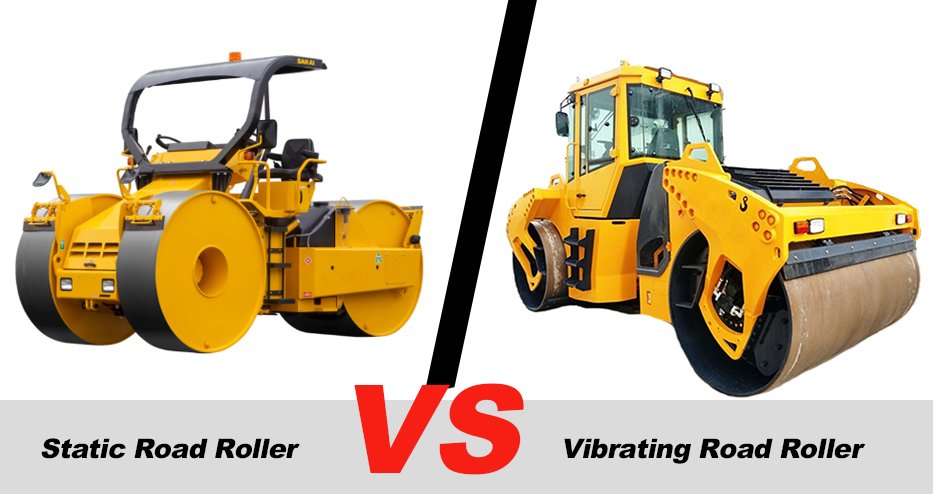
1. Vibrating Compactor Roller
The vibrating compactor roller leverages both its weight and hydraulic vibration to compact surfaces effectively. It is particularly suited for:
- Non-Cohesive Soils: Such as sand and gravel.
- Mixed Aggregates: Ideal for various construction projects, including asphalt paving.
Operational Mechanism:
Vibratory rollers utilize high-frequency vibrations (around 50 Hz) and amplitudes between 0.5 to 0.7 mm to induce relative displacement among soil particles. This vibration creates friction that accelerates compaction, allowing for depths of 50 to 60 cm, with some models reaching over 1 meter.
Productivity:
Under similar conditions, a vibrating compactor roller can achieve compaction rates up to three times greater than static rollers, significantly enhancing construction efficiency.
2. Static Rollers
Static rollers, in contrast, rely solely on their mass for compaction. They are best suited for:
- Cohesive Soils: Such as clay, where vibrations could disturb the material.
- Hard Surfaces: Like cement and asphalt.
Operational Mechanism:
Static rollers apply pressure through their weight, rearranging soil particles primarily by gravitational force. They typically achieve a compaction thickness of up to 25 cm and operate at slower speeds of 2 to 4 km/h, requiring 8 to 10 passes to achieve optimal results.
III. Key Operational Differences
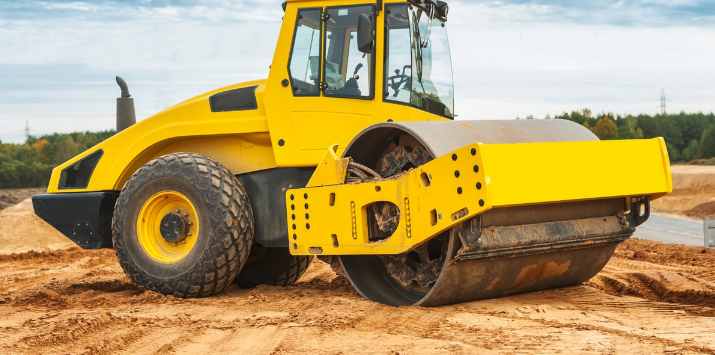
1. Compaction Efficiency:
- Vibrating Compactor Rollers: Achieve higher compaction efficiency due to their ability to rearrange soil particles effectively. This leads to faster project completion as they can compact more area in less time.
- Static Rollers: While effective, their reliance on weight means slower operation and more passes are needed to reach similar compaction levels, resulting in longer project timelines.
2. Production Rates:
The production rate of vibrating compactor rollers can be about three times that of static rollers under similar conditions. This difference is primarily due to:
- Vibration Mechanism: The vibrational force accelerates particle movement, leading to quicker and more effective compaction.
- Operational Speed: Vibratory rollers generally operate at speeds of 4 to 6 km/h, while static rollers operate at 2 to 4 km/h.
IV. Choosing the Right Roller for Your Project
When selecting a roller, consider the following factors:
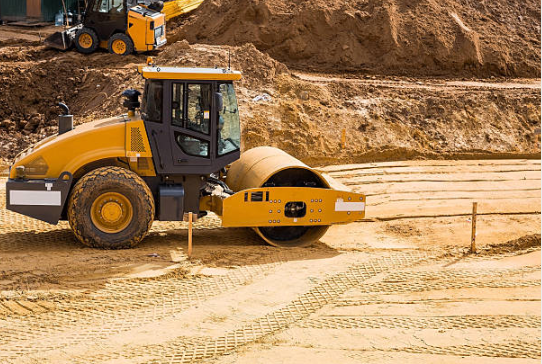
1. Soil Type:
- Vibrating Compactor Rollers: Ideal for sandy or gravelly soils and projects requiring quick compaction.
- Static Rollers: Better suited for cohesive soils, where vibration is not beneficial.
2. Project Environment:
- In colder climates or areas with challenging soil conditions, vibrating compactor rollers may be preferred to enhance efficiency.
- Static rollers may be more practical in mountainous or loose soil areas.
3. Economic Considerations:
While vibrating compactor rollers may have a higher upfront cost, their efficiency can lead to significant savings in labor and time, resulting in better long-term economic benefits.
4. Coordination with Other Equipment:
- Ensure that the chosen roller aligns with other machinery on-site, especially in highly mechanized projects where efficiency is key.
V. Qhmach Road Roller Supplier
At Qhmach, we specialize in the development and manufacturing of high-quality compaction equipment, including our road vibratory roller. As a trusted roller compactor manufacturer, our commitment to innovation and quality ensures that our products meet the diverse needs of the construction industry.
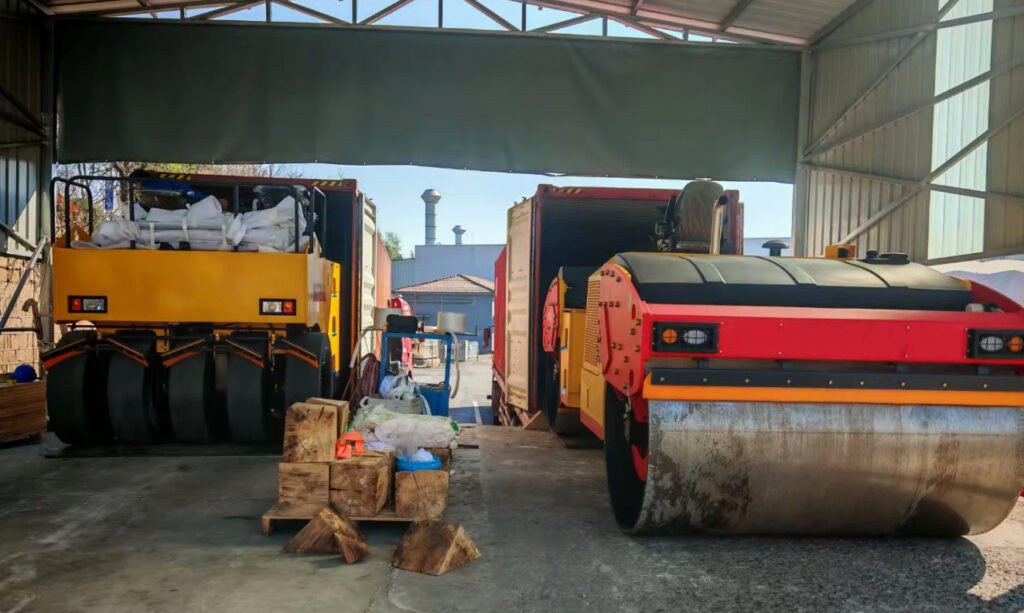
Qhmach road roller loading site
Based in the field of fully hydraulic road rollers, Qhmach has proposed the vision of “allowing users to enjoy fully hydraulic vibrating compactor rollers at a mechanical price,” quickly becoming popular in the road roller market. As a leading road roller supplier, we have significantly improved climbing ability, road surface quality, driving safety, and work efficiency compared with ordinary mechanical rollers.
More importantly, while focusing on quality improvement, Qhmach’s fully hydraulic vibrating compactor rollers align their prices with those of ordinary mechanical road rollers, committed to allowing customers to enjoy hydraulic road vibratory rollers at a mechanical price.
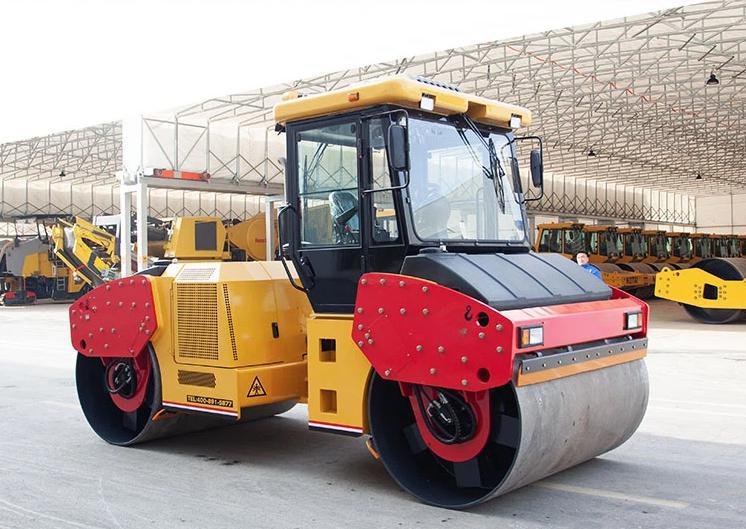
VI. Product Introduction: Qhmach WD136HF Fully Hydraulic Double Drum Vibratory Compactor Roller
1. Overview
The WD136HF vibrating compactor roller is a series fully hydraulic double drum vibratory roller, primarily suitable for compacting asphalt concrete, cement concrete, and other surface layers in the construction of high-grade highways, airports, parking lots, and similar projects. It is also ideal for compacting roadbed and sub-base materials.
2. Main Technical Performance and Characteristics
Powerful Engine: Equipped with a Cummins three-stage electronic fuel injection engine, providing 119 kW of power. This ensures strong performance, fast starting, convenient electric shutdown, durability, and fuel economy.
Closed Hydraulic System: Composed of a Danfoss high-pressure plunger pump and motor, the system guarantees good driving performance and high climbing ability. The hydraulic continuously variable transmission optimizes speed under varying working conditions.
Reliable Braking System: The braking system features multiple wet brakes on the vibrating wheel reducer and static hydraulic brakes within the closed hydraulic system, providing three functions: driving, parking, and emergency, ensuring safe and reliable operation.
Effective Vibration System: The closed vibration system, consisting of a Danfoss vibration pump and motor, offers dual frequency and dual amplitude. This scientifically configured system ensures effective compaction of various materials and paving layer thicknesses.
Robust Design: The vibration wheel features a four-point support inner cylinder vibration chamber structure for high strength and rigidity. It is equipped with impact-resistant reinforced imported vibration bearings to ensure excellent bearing performance. The carefully designed bearing seat includes a lubricating oil passage for optimal lubrication and heat dissipation, ensuring long-term reliability even under strong alternating loads.
Large Capacity Water Tank: The WD136HF double vibrating drum roller includes a large capacity water tank, ensuring continuous operation. It features a three-stage filtration system and an electrically controlled pressure spraying water system, allowing for continuous or intermittent spraying options.
With the WD136HF fully hydraulic double drum vibratory roller, Qhmach delivers a powerful and efficient solution for all your compaction needs, ensuring high-quality results on every project.
VII. Conclusion
In summary, both vibratory and static rollers have their strengths and weaknesses. Vibrating compactor rollers excel in efficiency and depth of compaction, often achieving three times the production rate of static rollers. On the other hand, static rollers offer versatility and ease of maintenance, making them suitable for specific applications. When selecting a roller for your project, consider factors such as soil type, environmental conditions, and economic implications. Making an informed decision will lead to better outcomes and smoother operations in your construction projects.
As a final note, always assess your needs and capabilities before making a decision. Choosing the right machinery should be a balanced choice to avoid complications and ensure successful project completion. Choose Qhmach for reliable and efficient compaction solutions that enhance your construction productivity.