I. Introduction
The 7 ton excavator segment has become a market sweet spot due to its optimal balance of payback period, strong demand, and competitive pricing. This has led to intense manufacturer competition and a vast selection of models from brands like Sany, Caterpillar, Liugong, Doosan, Kobelco, Volvo, XCMG, Hyundai, SDLG, and Sumitomo, significantly increasing the complexity of the purchasing decision for users.
To address this challenge, this article provides a detailed comparison and user feedback analysis of seven key 75 excavator models: the Sany SY75C, Liugong CLG9075E, Doosan DX75-9C, SDLG E675F, XCMG XE75DA, Kobelco SK75-8, and Hyundai R75BVS, offering practical guidance for prospective buyers.
II. Overview of 7 Top 7 Ton Excavator Models
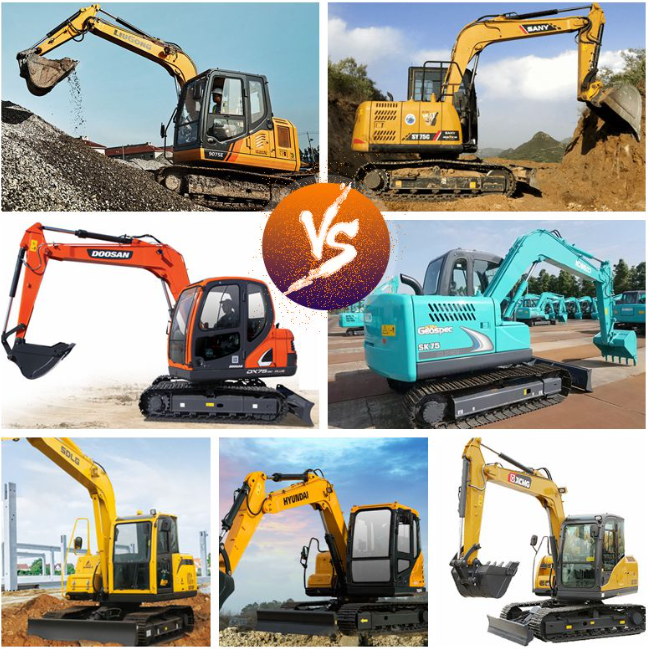
1. Sany SY75C Excavator – The Market Champion
- Core Positioning: Best-selling model, top market choice.
- Power System: Isuzu engine + Load-sensing hydraulic system.
- Key Components: Kawasaki main pump / Husco main valve + 7-inch large air pre-filter.
- Highlight Features: Suspension seat + Dual-stage fuel filtration system.
2. Kobelco SK75-8 Excavator – The Earthwork Specialist
- Core Positioning: Known as the “Earthwork Prince”, famous for fuel efficiency and high performance.
- Power System: Isuzu 4LE2XCUA engine.
- Key Advantages: Largest bucket in its class (0.4 m³) + Large-sized cabin.
- Operational Features: S/H dual-mode switching + Reclining seat.
3. Liugong CLG9075E Excavator – The King of Space
- Core Positioning: Benchmark for cabin space and ergonomic design.
- Space Improvement: 27% larger cabin space, 15% improved visibility.
- Mode Configuration: One-touch switch between P (Heavy-duty) / E (Economy) dual modes.
- Ergonomic Design: Sunroof + Bookshelf + Cup holder + Cooler/Heater compartment + Co-driver seat.
4. Hyundai R75BVS Excavator – The Enhanced & Stable
- Core Positioning: Weight-enhanced version for improved stability.
- Weight Comparison: 7240 kg (440 kg heavier than the previous generation).
- Power System: Yanmar 4TNV98-Z engine.
- Safety Systems: Arm flow assembly system + Boom holding system.
5. Doosan DX75-9C Excavator – The Comfort Standard
- Core Positioning: Medium-large sized cabin with outstanding comfort.
- Space Feature: Reclining seat, spacious cabin.
- Upgrade Highlights: “PLUS version” adds air/fuel pre-filters + Suspension seat.
- Convenience Feature: Standard electric fuel pump.
6. SDLG E675F Excavator – The Powerful Newcomer
- Core Positioning: Newly launched model, weight comparable to 8-ton machines
- Weight Advantage: 7700 kg, industry-leading.
- Power System: Kubota V2607 engine + Load-sensing hydraulics.
- Damping Design: Silicone oil damping + Advanced seat shock absorption.
7. XCMG XE75DA Excavator – The Tech Upgrade
- Core Positioning: Comprehensive upgrade of the XE75D.
- Power System: Kubota mechanical direct-injection turbocharged engine.
- Smart Control: Self-developed E/P/B triple-mode control system.
- Maintenance Design: X-frame undercarriage + Fully opening rear hood and side door + Hidden rear pillar.
III. 75 Excavator Multi-Dimensional Analysis
1. Excavator Basic Specifications Comparison
7 Ton Mini Excavator Comparison Chart
| Model | Working Weight (kg) | Dimensions (L×W×H) | Bucket Capacity (m³) | Fuel Tank (L) |
|---|---|---|---|---|
| Sany SY75C | 7280 | 6120×2220×2720 | 0.12-0.32 | 150 |
| Kobelco SK75-8 | 6850 | 6200×2320×2650 | 0.4 | 140 |
| Liugong CLG9075E | 7500 | 6100×2260×2700 | 0.32 | 140 |
| Hyundai R75BVS | 7240 | 6080×2260×2690 | 0.32 | 140 |
| Doosan DX75-9C | 7420 | 6030×2180×2680 | 0.3 | 111 |
| SDLG E675F | 7700 | 6235×2340×2585 | 0.1-0.32 | 135 |
| XCMG XE75DA | 7460 | 6150×2230×2685 | 0.3 | 130 |
Mini Excavator Comparison of Basic Specifications
As 75 excavator models, a comparison of their basic specifications reveals key differences:
Working Weight: The SDLG E675F, Liugong CLG9075E, and XCMG XE75DA rank as the top three heaviest models.
Overall Dimensions: The seven models are quite similar in size. The SDLG E675F has a slight advantage in length, while the Sany SY75C leads in height.

- Bucket Capacity: Bucket capacity for 7.5-ton excavators typically centers around 0.3 m³. Among these seven, the Kobelco SK75-8 stands out with the largest bucket at 0.4 m³.
- Fuel Tank Capacity: The Sany SY75C has a slight advantage here. The Liugong 9075E, Kobelco SK75-8, and Hyundai R75BVS share a common 140L capacity, which is standard for small excavators and sufficient for typical operational needs.
2. Excavator Power Performance Comparison
7 Ton Mini Excavator Comparison Chart of Engine
| Model | Engine Model | Power (kw) | Emission Standard |
|---|---|---|---|
| Sany SY75C | Isuzu AU-4LE2X | 43 | Tier III |
| Kobelco SK75-8 | Isuzu 4LE2XCUA | 42 | Tier III |
| Liugong CLG9075E | Yanmar 4TNV98 | 46.3 | Tier III |
| Doosan DX75-9C | Yanmar 4TNV98-EXS | 39 | Tier III |
| Hyundai R75BVS | Yanmar 4TNV98-Z | 44.4 | Tier III |
| SDLG E675F | Kubota V2607 | 42.4 | Tier III |
| XCMG XE75DA | Kubota V2607 | 42.4 | Tier III |
The engine is the heart of an excavator and serves as a critical reference standard when selecting a 7 ton excavator. Let’s examine the key differences among the engines powering these seven machines.
All seven models utilize engines from leading contemporary brands and comply with the Tier III emission standard.
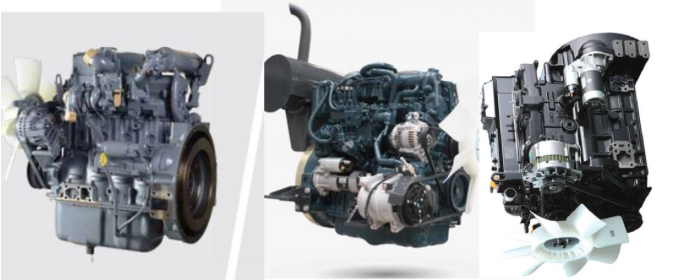
Isuzu Engine
Kubota Engine
Yanmar Engine
The engines can be categorized into three main groups:
- Isuzu Direct-Injection Turbo: Used by the Sany SY75C and Kobelco SK75-8.
- Yanmar 4TNV98 Series: Used by the Liugong 9075E, Doosan DX75-9C, and Hyundai R75BVS.
- Kubota V2607: Used by the China excavator SDLG E675F and XCMG XE75DA.
User Feedback & Power: According to user reports, Yanmar engines tend to be slightly noisier. In terms of rated power, the Liugong 9075E leads at 46.3 kW.
3. Excavator Cab Configuration Comparison
The operator’s cab is a critical factor for comfort and productivity. Here’s a comparison of the cab features across the seven models:
1) Space & Size:
Officially, the Liugong CLG9075E, Doosan DX75-9C, and Kobelco SK75-8 are categorized as medium-to-large sized cabs, making them excellent choices for users who prioritize spaciousness.
2) Visibility:
The Sany SY75C and SDLG E675F feature curved glass, which significantly improves rearward visibility for the operator.
3) Interior Features & Ergonomics:
The interior of the Hyundai R75BVS is noted for its simplicity, with relatively fewer user-centric design elements. In contrast, models from Sany, Liugong, Kobelco, XCMG, and SDLG perform better in terms of ergonomic and humanized design.
4) Display:
The Liugong 9075E stands out with a more high-end feel, equipped with a large-sized high-definition display screen.
4. Excavator Comparison by User Reputation & Evaluation
Based on authentic user feedback and evaluations from equipment owners, the following summary outlines the key strengths and weaknesses of each 75 excavator model. This real-world perspective provides crucial insights beyond technical specifications.
1) Sany 7.5 ton Excavator – SY75C
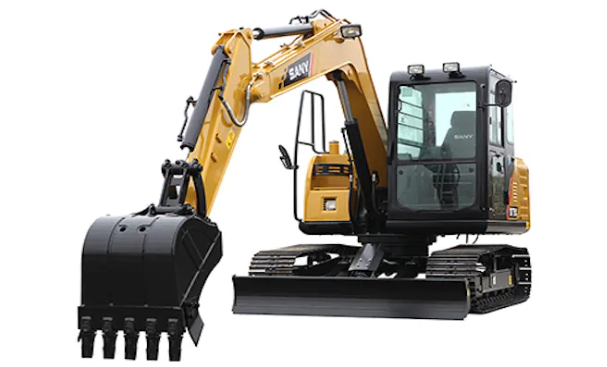
Pros: Light and effortless controls, very fast cycling speed (both single and combined movements), strong travel power. Isuzu engine is quiet and sounds smooth.
Cons: Cab space is relatively compact. The fuel inlet line lacks a shut-off valve, requiring extra caution during fuel filter changes to manage fuel level.
2) Liugong 7.5 ton Excavator – CLG9075E

Pros: Spacious cab with a luxurious suspension seat and an automatic climate system featuring multiple air vents (including overhead). Energy-efficient with P (High-power) and E (Economy) dual working modes. Ground-level, centralized service points for easy maintenance.
Cons: Cab overhang (6 cm beyond tracks) complicates loading onto trailers and reduces ground clearance.
3) Doosan 7.5 ton Excavator – DX75-9C
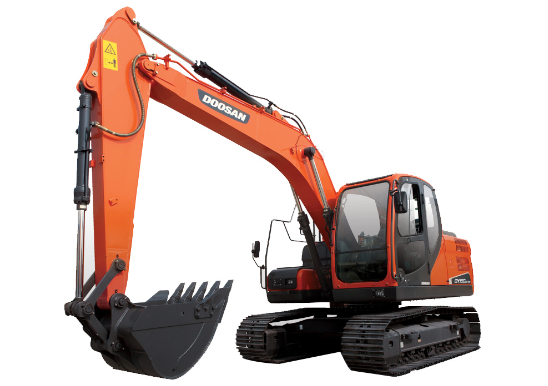
Pros: Exceptionally roomy cab. Comfortable suspension seat. Excellent radio reception, even in remote areas.
Cons: Blind spot for the left-side track. Poorly positioned grease fittings make lubrication difficult. Control levers are too thick for comfort. Bucket hinge pin diameter (4.5 cm) is smaller than the common 5 cm standard, raising durability concerns.
4) SDLG 7.5 ton Excavator – E675F

Pros: Good cab space. Fuel consumption is comparable to peers. Kubota engine is quieter than the common Yanmar engines. Operability and power are satisfactory.
Cons: Maintenance costs are reportedly high, exceeding those of some major brands.
5) XCMG 7.5 ton Excavator – XE75DA

Pros: Easy maintenance access (side-mounted pump, large engine bay). Highly comfortable cab (Cat-inspired design, digital display, excellent seat suspension). Powerful A/C cooling.
Cons: A/C is not automatic climate control.
6) Hyundai 7.5 ton Excavator – R75BVS
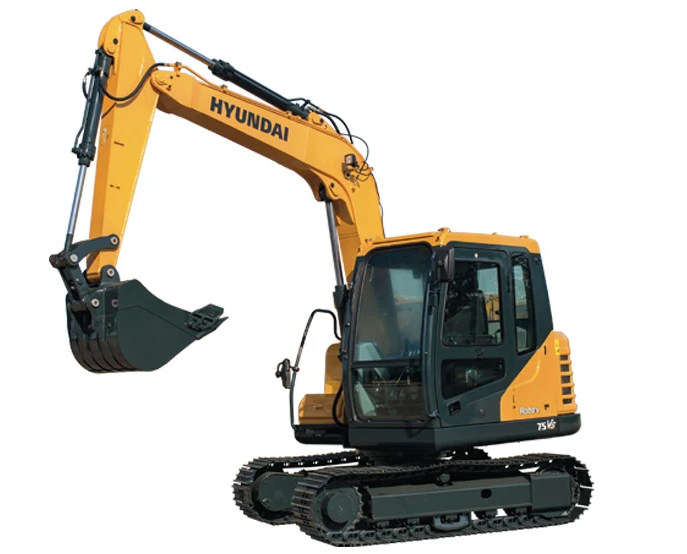
Pros: Good travel speed. Adequate power when new.
Cons: Poor coordination between travel and implement functions, lacking power for combined movements. Cab feels dated (e.g., mechanical hour meter). Design appears to be a mix of older model components.
7) Kobelco 7.5 ton Excavator – SK75-8
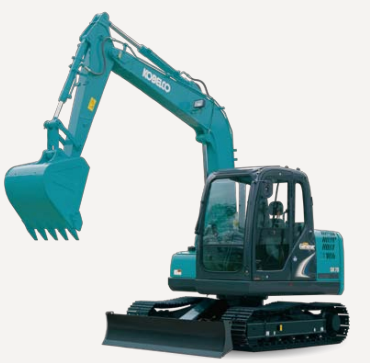
Pros: Highly fuel-efficient Isuzu engine. Large 0.4 m³ bucket offers superior loading and grading efficiency. Well-arranged filters for easy self-service maintenance. Spacious cab with excellent A/C.
Cons: Large bucket can slow down boom lifting, especially when old or in hot conditions. Weak travel power. Lacks track guards and a toolbox. Throttle motor is prone to failure.
IV. Professional China Excavator Manufacturer –WALMECH
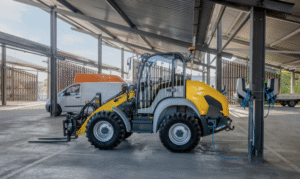
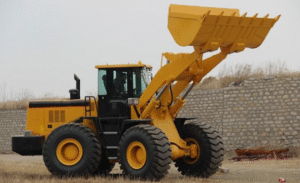
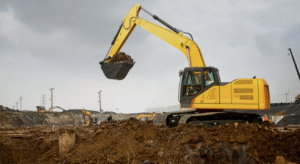
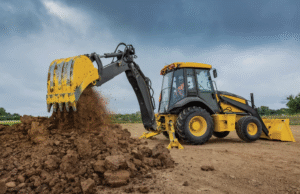
Finding the right equipment is key to your project’s success. While the 7.5-ton segment is competitive, WALMECH provides a broader solution. We offer a complete lineup from agile 1 ton mini excavator to powerful 33 ton excavator, available as crawler excavators, wheeled excavators, and versatile backhoe loaders. Whether you need maximum mobility, heavy-duty digging, or multi-purpose functionality, our machines are built for reliability, efficiency, and operator comfort.
V. Conclusion
This comparison highlights that the best 7.5-ton excavator depends on your specific needs. Whether prioritizing speed, comfort, fuel efficiency, or power, understanding each model’s strengths and trade-offs is key to making the right choice.
Still have questions or need personalized advice? We’re here to help. Simply tell us about your project requirements, budget, or any other considerations, and our team will provide expert recommendations to ensure you find the perfect equipment match.