I. Introduction
Excavators and loaders are two of the most essential and widely used machines in the construction machinery sector. Whether on large-scale infrastructure projects or small municipal works, their presence is almost ubiquitous. Some suggest that their functions overlap to some extent, and excavators can even replace loaders in certain scenarios. So, will loaders eventually be replaced by excavators?
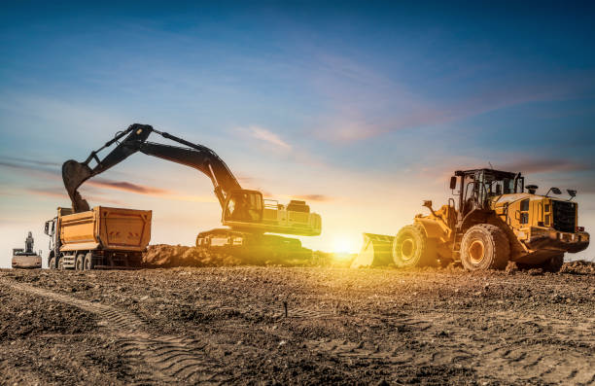
The answer may not be so straightforward. Considering the complexity of construction terrain and the continued demand for loaders in traditional sectors like infrastructure and mining, the two are likely to maintain a complementary and symbiotic relationship in the future. So, what exactly are their similarities and differences?
II. Common Ground
Both are construction machinery widely used in earthwork and rock operations;
Both can be used for loading and handling loose materials such as soil, sand, gravel, lime, and coal;
Both are equipped with a bucket for loading, unloading, and digging;
Both can use wheeled undercarriages.
III. Key Differences: A Comprehensive Comparison from Structure to Function
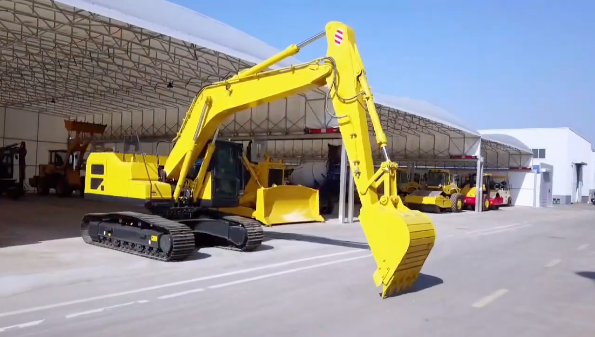
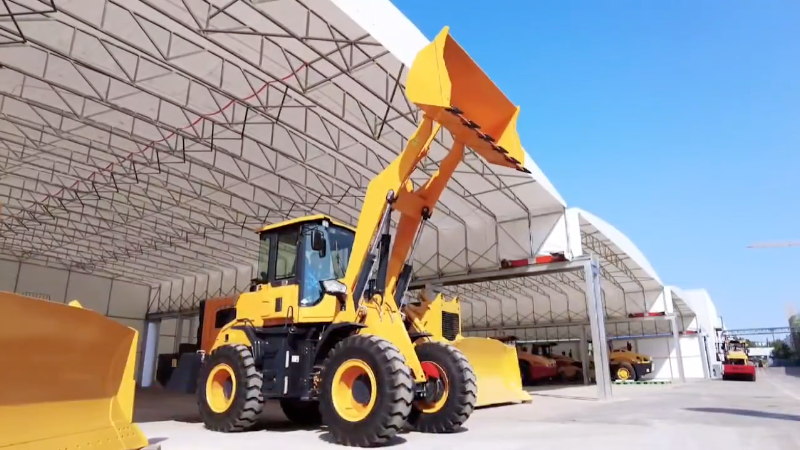
Despite the similarities mentioned above, excavators and loaders differ fundamentally in classification, design objectives, and practical applications. In simple terms, excavators are classified as “excavation machinery,” with their design core focused on precise and efficient digging capabilities; while loaders fall under “shovel-transport machinery,” emphasizing the rapid loading and short-distance transportation of materials. This fundamental distinction leads to significant differences across multiple dimensions.
To better illustrate the difference between loader and excavator, let’s examine the following key dimensions:
| Comparison Dimension | Excavator | Loader | Key Differences |
|---|---|---|---|
| Core Functions | Excavation, loading, crushing, slope grading | Loading, transport, stacking, short-distance handling | Excavators focus on "precision work," while loaders emphasize "batch transportation." |
| Working Radius | Effective radius ≤20 meters (requires frequent repositioning) | Effective radius ≤50 meters (self-mobile) | Loaders are more suitable for continuous operations within a site. |
| Energy Cost | Hydraulic system consumes high energy | Mechanical transmission saves more fuel | Loaders generally have lower long-term operational costs. |
| Operation Complexity | Requires multi-action coordination (boom/stick/bucket linkage) | Simpler actions (forward/backward/load/unload) | Beginners can learn to operate loaders faster. |
| Terrain Adaptability | Best on flat ground, slope ≤15° | Can handle rough terrain, slope ≤25° | Loaders can adapt to more complex terrain. |
| Maintenance Cost | Frequent hydraulic oil changes (annual maintenance ~10% of machine price) | Simple structure (annual maintenance ~5% of machine price) | Excavator maintenance requires higher technical expertise. |
| Resale Value | 3-year residual value rate 60% (significant brand premium) | 3-year residual value rate 45% (linear depreciation) | Excavators tend to retain their value better over the long term. |
Further detailed differences include:
1. Operational Methods and Limits:
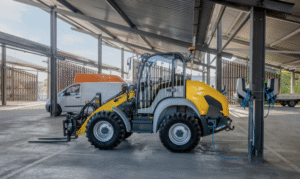
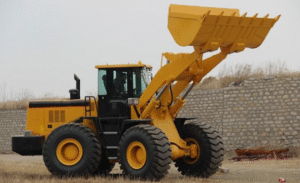
Typical loader operations include: truck loading, dozing, shoveling, transporting, grading, towing, and light lifting. They are mainly used for loading loose materials and can also perform light digging on ores and hard soil.
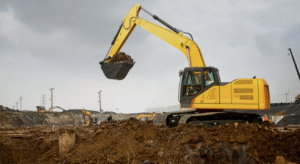
Excavator operations are more focused on excavation-related tasks: trenching, lifting, crushing, loading, demolition, slope leveling, earthwork, etc. Their digging targets include soil, coal, silt, and pre-loosened soil and rock.
2. Structural Composition:
Loader structure is mainly divided into the undercarriage (including track system, transmission, etc.), working device (boom, stick, bucket, and hydraulic cylinders), and superstructure (engine, cab, hydraulic system, etc.).
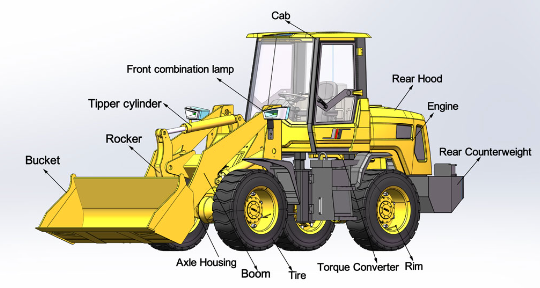
- Excavator structure is also divided into three main parts, but its undercarriage typically refers to the travel mechanism, the working device centers on the boom and bucket, and the superstructure integrates the power system, control system, etc.
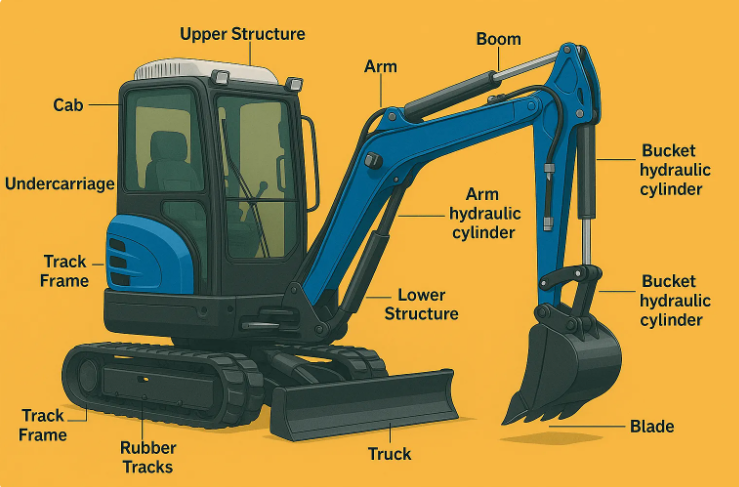
3. Operational Range and Product Characteristics:
Excavators have extremely strong digging capabilities within a fixed point but are relatively less mobile; loaders, with their better mobility, are suitable for material transfer across larger sites.
In the market, excavator products undergo faster technological iterations, while loaders see more minor model updates. The price difference is significant; for example, a mainstream 5-ton loader costs around $28,000, while a comparable excavator can be as high as $112,000.
Understanding the difference between loader and excavator is crucial when selecting the best earth moving equipment for a project. The debate of wheel loader vs excavator often comes down to specific operational needs rather than a simple superiority of one over the other.
IV. Innovative Fusion: The Backhoe Loader Machine
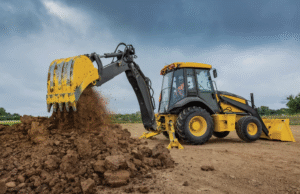
Precisely because the two machines have complementary functions and their respective irreplaceability, an innovative solution has emerged for projects requiring both digging and loading operations but constrained by cost or space—the backhoe loader machine, commonly known as the “backhoe.” It ingeniously places the loading device at the front and the digging device at the rear, allowing the operator to switch modes simply by rotating the seat.
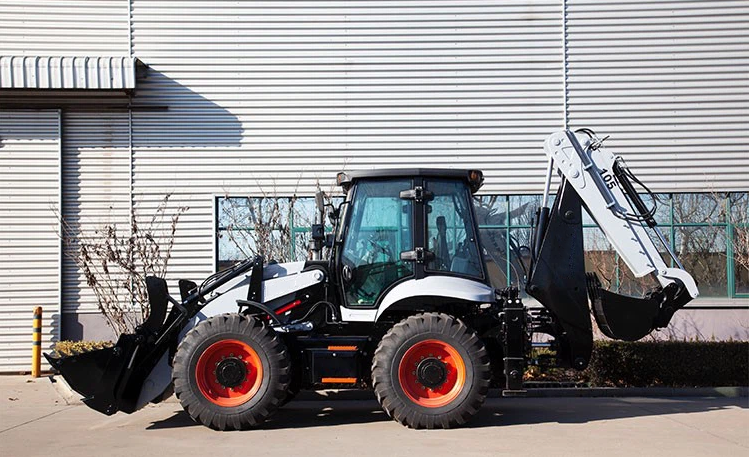
This design greatly expands its application scenarios, making it particularly suitable for multi-tasking, small-scale working environments such as urban and rural road maintenance, cable laying, farmland water conservancy, and small municipal projects. By changing attachments, it achieves multi-purpose use from a single machine, improving equipment utilization and cost-effectiveness.
For many contractors, the backhoe loader machine represents a versatile compromise, especially when the choice between a wheel loader vs excavator is not clear-cut.
V. Conclusion
“Excavator vs loader, who is the king?” This question may not have a single answer. They are not in a simple substitution relationship but are complementary partners based on different core strengths. The key to selection lies in the specific project requirements: when tasks demand deep excavation, fine leveling, or heavy crushing, the excavator is the more professional choice; when the core of the project is the rapid loading, transfer, and stacking of large volumes of material, the loader can provide higher efficiency. Furthermore, for diverse, small-scale comprehensive projects, the backhoe loader offers a highly cost-effective compromise.
Ultimately, identifying the best earth moving equipment requires a clear analysis of the task at hand and the distinct advantages offered in the excavator vs loader comparison. If you have any further questions about equipment selection or need assistance in determining the most suitable machinery solution for your specific project, Qhmach mechanical experts are here to help. We can provide professional advice and customized solutions to ensure your operations achieve optimal efficiency and cost-effectiveness.