I. Introduction
Road rollers are common road construction machinery, especially small rollers. The investment is not high, and as long as you are not unlucky, the investment cost will be recovered quickly. So how can a novice choose a suitable road roller? I hope that by understanding the common problems of road rollers in this article, you can help you choose the most suitable road roller.
This article serves as a comprehensive guide to road rollers, essential equipment for road construction. It covers the definition and types of road rollers, including cylindrical, grid, pneumatic tire, sheepsfoot, smooth, and vibratory rollers, each with specific uses. The differences between road rollers and compactors are highlighted, as well as their weight classifications from below 1 ton to over 16 tons. Pricing factors for both new and used rollers are discussed, alongside leading manufacturers like BOMAG, DYNAPAC, and Qhmach, which specializes in fully hydraulic rollers. The conclusion encourages readers to consider their needs when selecting a road roller.
II. Basic Knowledge of a Road Roller Machine
1. What is a road roller?
A road roller, also known as a soil compactor, is a type of road construction equipment. Among construction machinery, road rollers are classified as road equipment and are widely used for fill and compaction operations on large-scale projects such as highways, railways, airport runways, dams, and stadiums. They can compact sandy, semi-cohesive, and cohesive soils, stabilized roadbed soils, and asphalt concrete pavement layers. Using the force of the machine itself, a road roller is suitable for various compaction operations, achieving permanent deformation and densification of the compacted layer.
2. What types of road rollers are there?
Here are six common types of compactor road roller:
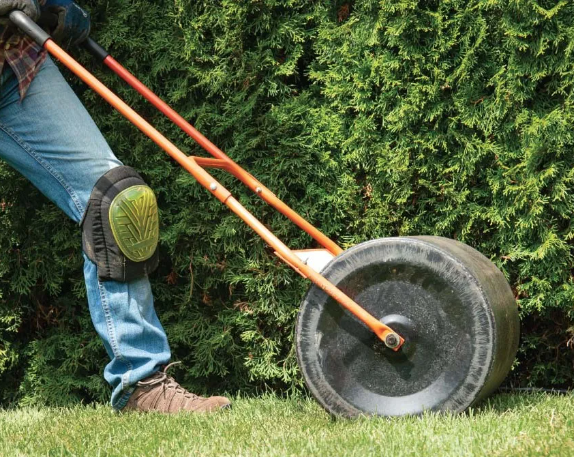
1) What is a Cylindrical Hand Roller?
Traditional cylindrical rollers are relatively lightweight and are manually pushed. Cylindrical rollers typically have a diameter of 1 meter and are generally made of iron, stone, or concrete. They are primarily used for small and personal projects, such as yard work.
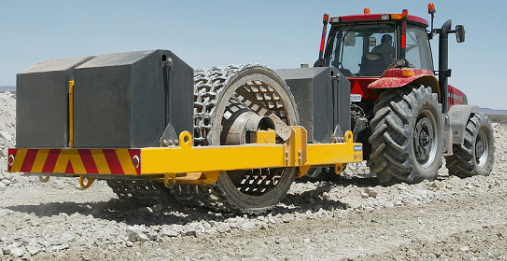
2) What is a Grid Roller?
Grid roller is construction road roller with a network of steel bars that create a grid-like pattern on the steel drum. These can be loaded with concrete blocks or steel attachments for greater contact pressure. These types of rollers are typically towed or hauled behind a tractor or other heavy machinery.
The grid design on the roller creates high contact pressure with little pinching effect for compaction. Therefore, they are best suited for well-graded coarse soils, weathered rock, and roadbed and base course construction.
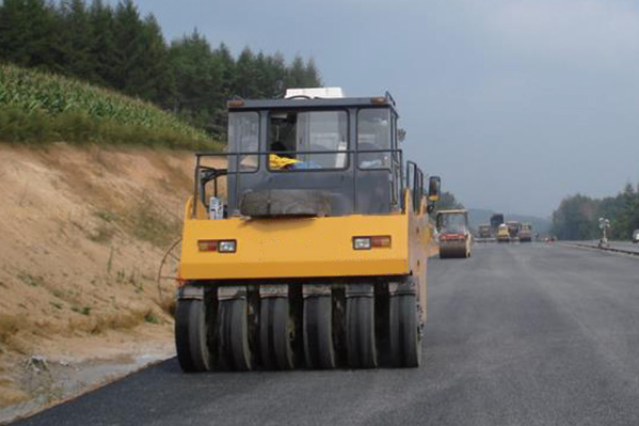
3) What is a Pneumatic Tire Roller?
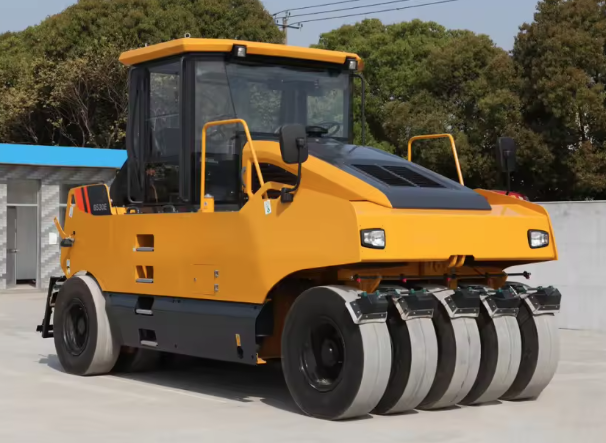
Pneumatic rollers, sometimes also called pneumatic tire roller, are large, ride-on rollers with several rows of rubber tires on the front or rear. The rubber tires provide 80% coverage and uniform pressure across the entire tire width.
They are commonly used on sidewalks to help level and polish projects, but are also suitable for cold-laid asphalt or cold-mix pavement and loose soil layers.
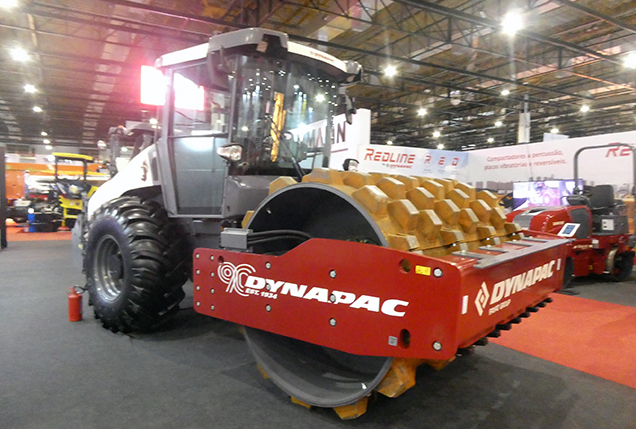
4) What is a Sheepsfoot Roller?
Sheepsfoot roller, also known as pad rollers or tamping rollers, are rollers with many rectangular lugs or “feet.” They are ideal for compacting soil and silty clay in road construction.
5) What is a Smooth Roller or Static Roller?
There are generally two types of smooth rollers: single drum roller and tandem roller compactor.
Tandem roller compactor are ideal for flat or graded surfaces like asphalt, but because they have minimal traction, they are not recommended for any specialized applications.
Three wheel roller or single drum rollers are some of the most common heavy-duty machines, suitable for working in tight spaces and for more specialized projects. They are ideal for laying foundations for buildings and paving highways or sidewalks.
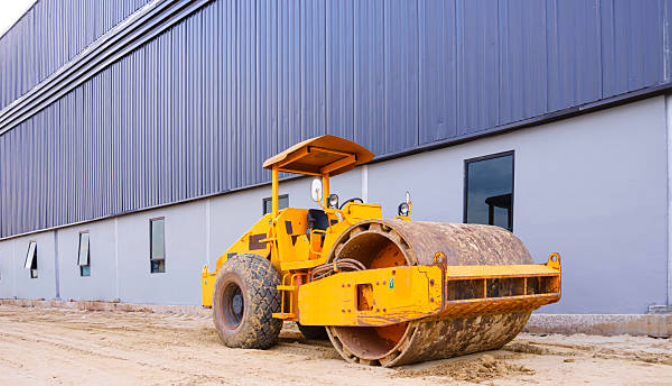
6) What is Vibratory Roller?
Vibratory rollers are nearly identical to smooth drum rollers (both single drum roller and double drum roller), but with one key difference: they have a specialized vibration component and excel at compacting other types of soil, such as crushed stone or gravel.
Because soil, asphalt, and concrete have natural voids, they can cause warping and sinking in buildings, leading to structural damage. Using a vibratory roller helps maintain the structural integrity of buildings.
3. What is the difference between a road roller and a road compactor?
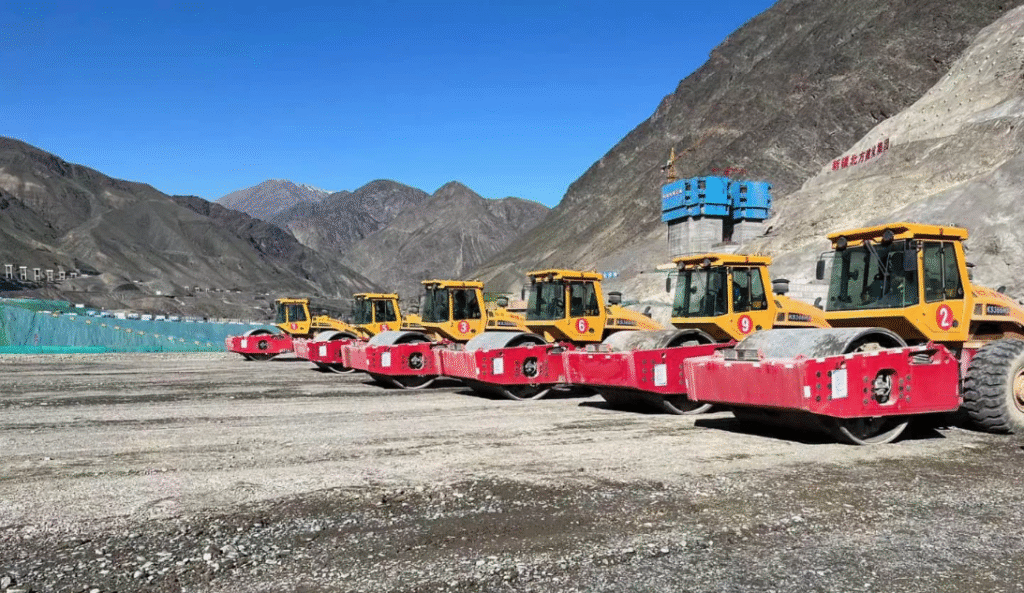
Road roller is designed for large-scale pavement construction, such as roads and airport runways. They compact pavement material through repeated rolling of steel wheels or tires, typically to a depth of 20-50 cm. Rollers rely on a combination of deadweight (8-25 tons) and vibration (25-50 Hz) for compaction. Road compactors, on the other hand, are suited for localized, high-intensity compaction, such as ground reinforcement and trench backfilling. For example, plate compactors can generate an impact force of 10-30 kilonewtons and are suitable for loose materials such as sand, gravel, and clay. Compactors typically use impact or vibration-plus-impact modes. For example, a frog-type compactor can deliver a single impact energy of 500-1500 joules.
4. What is the weight of a road roller?
Road Roller weights range from 1 to 22 tons. Common roller tonnages include mini road roller under 1 ton, small road roller from 1 to 6 tons, medium road roller from 6 to 10 tons, heavy road roller from 10 to 14 tons, and ultra-heavy rollers over 16 tons. Rollers of different tonnages have different uses and characteristics.
| Roller Weight Range | Key Features | Applicable Scenarios |
| Below 1 ton road roller | Compact size, easy to operate, suitable for narrow areas. Powered by gasoline or diesel engines. | Sidewalks, residential roads, small projects |
| 1 to 6 tons road roller | Simple design, large drum size for greater compaction area, excellent climbing performance, suitable for various road base and surface compaction tasks. | Highway construction, urban roadworks, earthworks |
| 6 to 10 tons road roller | Significant improvement in compaction ability, advanced vibration system for flexible adjustment to achieve optimal compaction results. | Highways, airport runways, high compaction quality projects |
| 10 to 14 tons road roller | Strong driving capability, efficient vibration effect, stable performance under various construction conditions. | Large-scale infrastructure construction like roads, railways, ports |
| Over 16 tons road roller | Equipped with a fully hydraulic drive system, convenient and responsive, capable of handling complex conditions and high compaction standards. | Key projects like high-speed rail construction, large airport construction |
III. What is the price of road roller?
The price of a road roller varies significantly depending on factors such as type, brand, tonnage, and condition. The following is a rough price range for reference:
1 Ton to 3 Tons Small Road Roller Price:
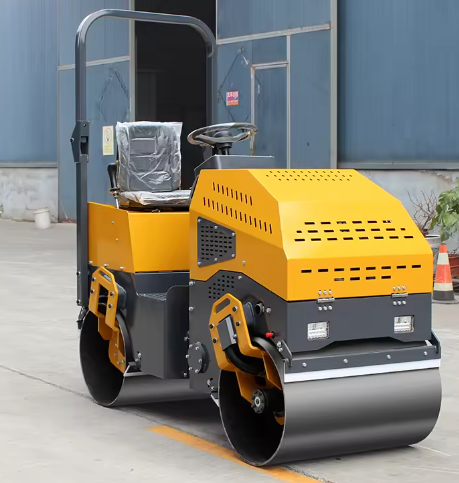
New road roller machine price typically range from $700 to $4,200 in China. Suitable for small roads, gardens, trench backfilling, and other applications.
Used road roller machine price range from $1,400 to $2,800 in China. For example, a small 1.5-ton ride-on roller starts at around $1,700.
20 Ton to 26Ton Road Roller Price:
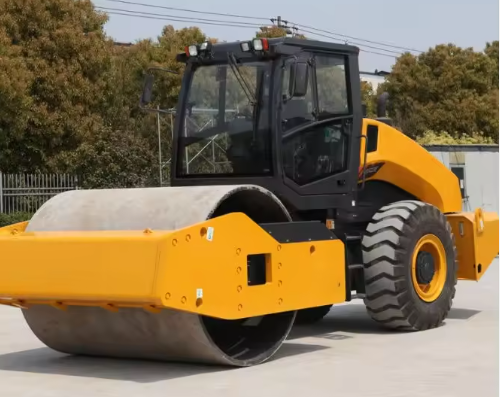
New road roller machine price for new rollers from mainstream China brands (such as XCMG road roller and LiuGong road roller) typically range from $49,000 to $70,000.
Used road roller machine price, depending on age and operating conditions, a used roller of around 20 tons ranges from $24,000 to $35,000; a used roller of around 26 tons ranges from $27,000 to $29,000.
30 Ton and Above Road Roller Price:
New road roller machine price typically exceed $70,000, with some high-end brands or special-purpose models potentially costing even more.
Used road roller machine price vary depending on the condition of the equipment, generally ranging from $28,000 to $56,000.
Note:
The price of used equipment is significantly affected by factors such as age, operating hours, maintenance, and wear. We recommend an on-site inspection to assess the actual operating conditions.
Road rollers of different brands and models vary in performance and configuration, leading to price differences. When purchasing or leasing, choose the appropriate model based on your project needs.
IV. Which road roller manufacturers are there?
1. The leading road roller manufacturers in the world:
| Road Roller Manufacturer | Founded | Key Details | Main Products |
| BOMAG | 1957 | World’s largest compaction machinery company, controlling about 30% of the market. Acquired by SPX, then Fayat. Established first factory in China in 2002. | BOMAG single drum road roller & double steel wheel rollers |
| DYNAPAC | 1934 | Leader in compaction and paving with over 70 years of experience. Established technology center in Sweden. | DYNAPAC Single & double steel wheel rollers, DYNAPAC combination roller |
| HAMM | 1878 | Fourth largest global compaction equipment manufacturer. Acquired by Wirtgen in 1999. Joint venture in China since 2004. | HAMM Soil & asphalt compaction equipment (1.5-26 tons) |
| Ammann | 1911 | Started producing motorized rollers in 1911. Dual steel wheel rollers produced in Switzerland and Czech Republic. | Ammann dual steel wheel and single drum rollers |
| SAKAI | 1918 | Japan’s largest and oldest manufacturer of road construction and maintenance equipment. Established overseas plants in the US, Indonesia, and China. | SAKAI vibratory rollers, static rollers, small hand-operated compaction roller |
| CATERPILLAR | 1985 | Established road machinery plant with 4 factories, producing various types of rollers. Set up a factory in China in 2002. | CATERPILLAR landfill compactors, single & double steel wheel road rollers, pneumatic tire roller |
2. Cost-effective China Road Roller Manufacturer:
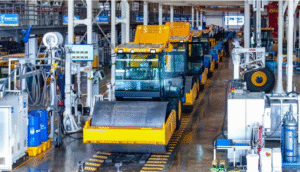
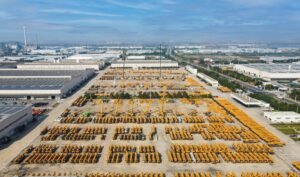
Qhmach, starting with fully hydraulic rollers, has, after several years of development, become a rising star in the roller industry. Currently, Qhmach offers over 60 product varieties across four product series: fully hydraulic single drum road roller, fully hydraulic double drum road roller, fully hydraulic pneumatic tire roller, and landfill compactors, ranging from 3 tons to 36 tons. For over a decade, Qhmach has exported over 200 fully hydraulic rollers annually.
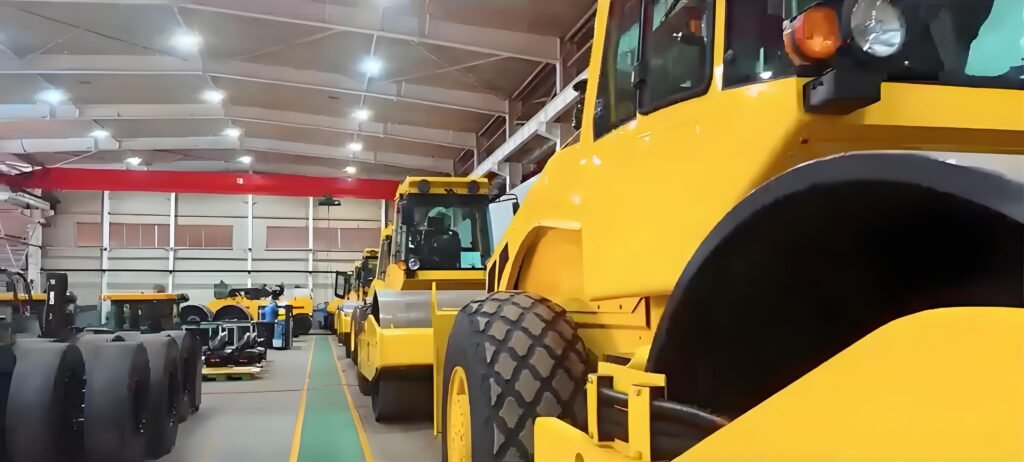
Qhmach Road Roller Factory
Compared to conventional mechanical rollers, Qhmach’s fully hydraulic rollers offer significant improvements in gradeability, road quality, driving safety, and operating efficiency. More importantly, while focusing on quality, Qhmach’s fully hydraulic rollers maintain pricing consistent with conventional mechanical rollers, ensuring customers enjoy hydraulic products at mechanical prices.
Our mission is to “build the best fully hydraulic rollers in China.” In the international market, after years of market development, Qhmach Heavy Industry has initially established an overseas sales service system, and its products are exported to more than 30 countries and regions including Australia, Russia, Brazil, Venezuela, Saudi Arabia, Algeria, Iran, Egypt, Chile, Ethiopia, India, Iraq, etc.
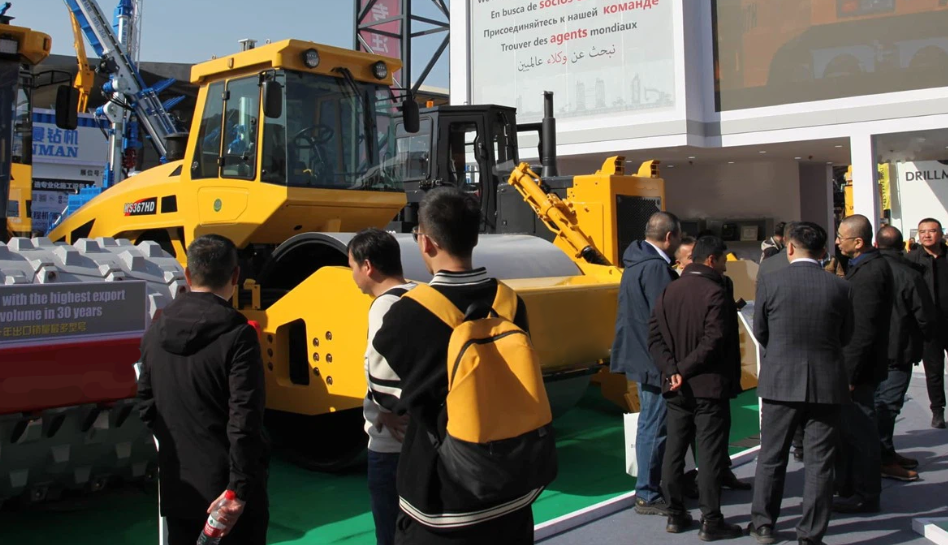
3. Which road roller brand should I choose?
If you have sufficient funds and don’t care about the project settlement period, you can directly choose a well-known international brand. However, if your budget is limited, cost-effectiveness may be the most important consideration. Qhmach, which specializes in the research and development of road rollers, is a good choice.
V. Conclution
The above are some basic questions buyers need to know about road rollers. We hope that after reading this article, you will have a clearer understanding of your purchasing goals. If you have any questions or needs regarding road roller machinery, please feel free to contact us. Qhmach will use its years of experience in road rollers to help you analyze the most suitable road roller product for you.